Power Distribution Units
A Power Distribution Unit (PDU) is a device used to distribute power to multiple devices or servers in data centres, server rooms, and other industrial settings.
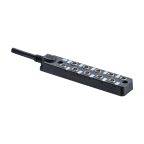
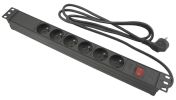
These essential units, frequently found as rack mount PDUs or server rack PDUs, come in various sizes, offering up to 42 sockets. They can be supplied with or without integrated cables, depending on your setup needs.
PDUs provide a safe and efficient method for managed power distribution, ensuring that critical equipment remains consistently powered. They centralise control and monitoring of power usage, which helps to reduce the risk of overloads or outages.
By enabling continuous monitoring, PDUs allow for the early identification of potential issues, preventing them from escalating into major problems.
Features of a Power Distribution Unit (PDU)
PDUs come equipped with various features designed to enhance safety, flexibility, and control over power distribution.
Corded
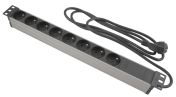
Corded PDUs come with a power cable permanently attached. This offers a simple, ready-to-use solution for immediate installation, eliminating the need to source a separate power input cable.
Fused
Fused PDUs incorporate individual fuses for each outlet or a main fuse for the unit. This provides crucial overcurrent protection, safeguarding connected equipment from damage due to electrical faults.
RCD Protected
RCD (Residual Current Device) protected PDUs offer enhanced safety by quickly disconnecting power if a dangerous earth fault is detected.
Rewireable
Rewireable PDUs allow the power input cable to be detached and replaced. This offers flexibility for customisation, enabling users to fit a cable with a specific length or connector type as needed.
Surge Protection
PDUs with surge protection are designed to shield connected equipment from harmful power surges or spikes. This feature is vital for preventing electrical damage, reducing the risk of downtime, and avoiding data loss.
Switchable
Switchable PDUs feature individual switches for each outlet or groups of outlets. This allows users to control power to specific devices or sections of equipment independently.
Wired
Wired PDUs are typically integrated into a permanent electrical setup, often within server racks or industrial panels. They provide robust and stable power distribution for fixed installations.
Different Levels of PDU Intelligence
Power Distribution Units (PDUs) range from simple power strips to sophisticated smart devices that offer advanced management capabilities.
A normal PDU simply distributes power, while a smart PDU provides enhanced control, monitoring, and networking features for more efficient power management.
Basic
Basic PDUs are the most straightforward type. They provide reliable power distribution to multiple outlets without any advanced monitoring or control features. They essentially function as robust, multi-outlet power strips designed for rack-mounting or general industrial use.
Metered
Metered PDUs offer local power monitoring through a built-in display on the unit itself. They provide real-time readings of current, voltage, and sometimes power consumption for the entire PDU. This allows for manual power usage tracking and helps prevent localised overloads.
Monitored
Monitored PDUs are considered one of the smart PDU types. They offer advanced, remote power monitoring capabilities, allowing IT staff to track power usage, voltage, and current for the entire PDU or individual outlets from anywhere via a network connection.
Switched
Switched PDUs are another key type of smart PDU. They combine remote monitoring with the ability to remotely control power to individual outlets or groups of outlets. This means users can remotely turn outlets on or off, power cycle equipment, or sequence power-up and shutdown.
Benefits of Smart PDUs
Smart PDUs offer significant advantages beyond basic power distribution. They provide real-time data on power consumption, enable remote power management, offer proactive alerting for potential issues, and facilitate energy efficiency optimisation.
1-Phase and 3-Phase PDUs
PDUs are configured to manage electrical supplies as either single-phase or three-phase, with the choice depending on power demands and infrastructure.
- 1-Phase PDUs: These receive and distribute power from a single alternating current (AC) phase. Commonly used in homes, small offices, and smaller server racks, they are simpler to install, often more cost-effective, and ideal for setups with moderate power needs.
- 3-Phase PDUs: Built to handle higher power demands in data centres and large industrial facilities, these units distribute power through three alternating current (AC) phases. This configuration provides a continuous and more stable supply.
PDU Mounting Options
PDUs are designed to be mounted in various ways, to optimise space and accessibility within electrical setups.
Horizontal
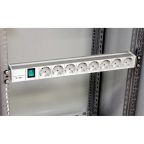
Horizontal PDUs are designed to be mounted horizontally within a server rack, typically occupying 1U or 2U of rack space (a standard unit of measurement for rack-mountable equipment). This mounting style is common in racks with limited vertical space but ample horizontal room.
Vertical
Vertical PDUs are designed to be mounted vertically along the side of a server rack. This orientation allows them to extend across multiple U-spaces without consuming valuable horizontal equipment mounting space.
Industrial Applications of PDUs
PDUs play a vital role in managed power distribution. Our range includes units in multiple socket types (Type E, F, G), colours, sizes and configurations, designed to meet your specific power needs.
Data Centers and Server Rooms
Power Distribution Units (PDUs) are fundamental in data centers and server rooms. They power servers, switches, routers, and other critical network equipment in high-density IT environments.
Manufacturing Plants
In manufacturing plants, PDUs provide reliable power distribution to machinery, assembly lines, and control systems. They help manage complex power needs, minimising downtime and supporting continuous production processes.
Warehouses
PDUs are essential in warehouses for powering material handling equipment, lighting systems, and various automated solutions.
Healthcare Facilities
In healthcare settings, PDUs ensure a stable and managed power supply to critical medical equipment, diagnostic tools, and life-support systems. Their reliability is paramount for patient care and facility operations.
Educational Institutions
PDUs are used in educational institutions to power IT labs, classrooms, administrative offices, and specialised research equipment.
How to Choose the Right PDU
Choosing the right Power Distribution Unit (PDU) is crucial for efficient and reliable power management. Consider these key factors for your specific needs:
- Power Distribution Unit Intelligence Level: Decide if you need a basic PDU for simple power distribution, or a smart PDU for advanced capabilities.
- Phase Configuration: Determine if your setup requires a 1-phase PDU or a 3-phase PDU.
- Power Type: Choose between AC or DC PDU based on your system’s requirements.
- Mounting Type: Select between horizontal mounting or vertical mounting based on your layout.
- Outlet Count and Types: Ensure the PDU includes enough outlets for your setup, and that they match your equipment’s plug types, such as IEC C13, C19, or national standards (e.g., Type E, F, G)..
- Voltage and Amperage Ratings: Match the PDU's voltage and amperage ratings to your power supply and the requirements of your equipment.
- Additional Features: Look for features like surge protection, circuit breakers, individual outlet switching, or RCD protection.
How to Install a PDU
Installing a PDU properly ensures safe and effective power distribution. Follow these general steps, always referring to your specific PDU's manual for detailed instructions:
- Safety First: Before starting, ensure all power to the rack or area is turned off.
- Mount the PDU: Securely mount the PDU to your server rack.
- Connect Input Power: Plug the PDU's power input cord into the appropriate power source (e.g., wall outlet, UPS, or main power panel). Ensure the power source can handle the PDU's total load.
- Connect Devices: Plug your servers, switches, routers, and other equipment into the PDU's outlets. Use proper cable management to keep cords organised and prevent airflow obstruction.
- Power On and Verify: Once all connections are secure, restore power to the rack. Verify that the PDU powers on correctly and that all connected devices receive power. For smart PDUs, check the monitoring interface to confirm functionality.
PDU Supplier & Distributor in Australia
Secure your power management solutions with confidence at RS Australia. As your trusted supplier and distributor, we offer a broad array of high-quality Power Distribution Units (PDUs) from top brands like Bodo Ehmann, Amphenol Industrial, and Hama. Explore our extensive online range to find the perfect PDUs, surface mount sockets, and DC power plugs and sockets for your needs.
To complete your purchase, simply place your desired products in the cart and proceed to our secure, checkout process. We provide flexible payment solutions for your convenience. For specifics regarding our delivery services, please consult our dedicated Delivery Information page.
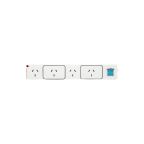
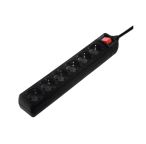
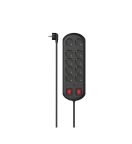
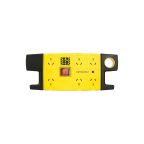
Popular Searches
Related links
- Server Cabinet Accessories
- APC IEC C13 12 Gang Power Distribution Unit 16A, 100 → 240 V
- APC IEC C13 20 Gang Power Distribution Unit 32A, 230 V ac
- Rittal 4 Gang Power Distribution Unit
- Rittal IEC C13 Power Distribution Unit
- Rittal Power Distribution Unit
- nVent SCHROFF Schuko 15 Gang Power Distribution Unit
- nVent SCHROFF Power Distribution Unit