Rack Rails
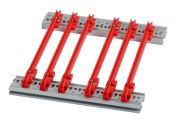
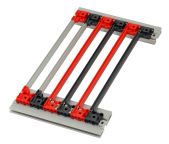
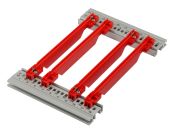
Rack rails, sometimes called rack strips, are pieces of hardware used to mount equipment and accessories within server cabinets (also called 19-inch racks). Server rails are essential for mounting your server and holding it in position within the rack, whilst providing accessibility for maintenance.
Rack rails are usually supplied in pairs as two rails are needed to mount each piece of network hardware. Rack rails have a robust construction and are typically made from steel or aluminium. The rails can be specifically designed for the rack or equipment that you are using, while others are for universal use.
Types of Rack Rails
Rack rails are available in two primary types, each offering a different level of accessibility to the mounted equipment.
Telescopic Rails or Slide Rails
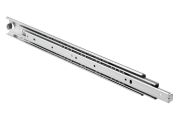
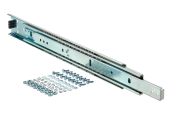
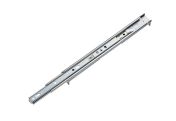
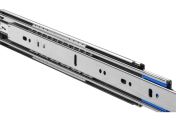
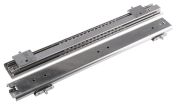
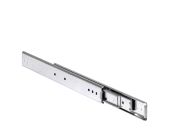
Often referred to as server rack sliding rails or sliding rack rails, these rails function like a drawer slide, allowing the mounted device to be pulled completely out from the rack. This provides full, convenient access to the top, back, and internal components of a server or other equipment without having to un-mount it. These server rack slides are essential for devices that require frequent maintenance, cable changes, or servicing.
Static Rails or Fixed Rack Rails
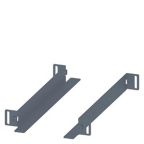
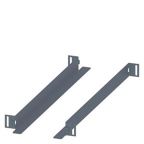
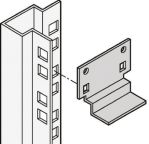
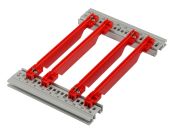
Static rails, also known as fixed rackmount rails or server rack mounting rails, are a simpler, non-moving support solution. They typically consist of L-shaped brackets or shelves that securely hold equipment in a fixed position within the rack. These rails are a cost-effective choice for lighter devices like patch panels, network switches, or other equipment that does not require regular access to its rear panels.
Features of Server Rack Rails for 19-Inch Cabinets
Beyond the basic type, server rack rails have several features that contribute to their durability, ease of use, and overall functionality. High-quality rails are typically made from heavy-gauge steel to ensure high strength and load-bearing capacity. Most are finished with a durable powder coating to resist scratches and corrosion. Many designs are adjustable in length to accommodate different rack depths, and some advanced sliding rack rails incorporate cable management arms to keep wiring organised and prevent snagging when equipment is moved.
Slide Rail Variants
The smooth operation of server rack sliding rails is primarily determined by their slide mechanism. The two most common variants are:
Ball Slides
Server rack rails with ball slides use precision ball bearings contained within a cage to provide exceptionally smooth and low-friction movement. This mechanism is ideal for heavy servers and equipment, as it allows for an effortless gliding motion even when supporting significant weight, ensuring easy extension and retraction.
Roller Slides
Roller slides use small, durable wheels or rollers to facilitate movement. This is a robust and reliable mechanism suitable for a wide range of applications and load weights. While very effective, roller slides might not offer the same degree of smoothness as ball bearing slides for extremely heavy loads but provide excellent durability for general use.
Compatibility of Server Rack Rails with Cabinets and Hardware
Ensuring compatibility between your rack rails, the cabinet, and the equipment is critical for a successful installation.
- Rack width: The global industry standard for rack enclosures is 19 inches. Therefore, a 19 rack rail is the most common and widely available type, designed to fit these standard cabinets.
- Rack depth: Unlike width, rack depth is not standardised and can vary significantly. The server rack rails you choose must be compatible with the specific depth of your cabinet, measured between the front and rear vertical rack rails. Many rails offer adjustable depths to accommodate different cabinets.
- Mounting hardware: Server rails must be secured to the cabinet's vertical rails using compatible hardware. Most rack rails are mounted using M6 cage nuts and screws, which are selected based on the type of rail holes in your cabinet—whether square, round, or threaded.
- Supported devices: Rails are often designed for specific equipment models or a certain range of sizes and weights. Always check the rail's weight capacity and mounting point compatibility with the server or device you intend to install. Compatibility is also defined by rack units (RU), with rails designed to support devices of a specific height (e.g., 1U, 2U, 4U).
Are Server Rack Rails Universal?
While many rack rails are available, they are not a one-size-fits-all solution. Universal server rack mounting rails are designed to fit most standard 19-inch racks with square or round mounting holes and can typically support a variety of devices from different manufacturers.
However, they are not always compatible with proprietary server systems. Major server brands like Dell, HP, and IBM often use unique tool-less mounting mechanisms or specific rail kits designed exclusively for their hardware. These proprietary rackmount server rails offer the quickest installation and a perfect fit for their intended server models.
To avoid incompatibility:
- Always verify the rail's supported depth range against your cabinet's measurements.
- Check that the rail's mounting hardware matches your rack's hole type (square, round, or threaded).
- When possible, use the rails recommended or provided by the server manufacturer. If using universal rails, double-check their compatibility list or specifications against your device.
How to Choose the Right Rackmount Rails
Whether you’re installing a lightweight 1U network switch or a heavy 4U server, selecting the correct rackmount rails is essential. Consider the following:
- Weight Capacity: Ensure the rails are rated to support the full weight of your equipment. It's recommended to choose rails with a safety margin to accommodate unexpected loads or upgrades.
- Rail Type (Sliding vs. Fixed): Choose sliding rails for any equipment that will require service or access to rear cabling. Opt for fixed rails for lighter, low maintenance devices such as patch panels or network switches.
- Rack Compatibility: Verify that the rails match your rack’s specifications, including the standard 19-inch width, rack depth, and mounting hole type (square, round, or threaded).
- Equipment Compatibility: Use manufacturer-specific rails where possible. If using universal rails, confirm they will physically fit and support your specific server or device model.
- Extension Length & Features: For sliding rails, check the full-extension distance—important for pulling equipment fully out of the rack for maintenance. Also consider additional features like locking mechanisms or cable management arms like cable grommets to streamline servicing and reduce clutter.
Industrial Applications of Server Rack Rails
Server rack rails are fundamental components in a wide range of industries beyond standard IT environments.
Data Centers & IT Closets
This is the primary application, where rack rails are used to house servers, storage arrays, and networking equipment in a high-density, organised, and serviceable manner. Both server rails and network rack rails are essential for data center operations.
Telecommunications
In telecom facilities and exchanges, rack rails are used to mount network switches, routers, patch panels, and power distribution units (PDUs) in standard equipment racks, ensuring the reliability of communication infrastructure.
Audio/Video Broadcasting & Production
Broadcasting studios and live event venues use 19 rack rail systems to mount AV processors, amplifiers, recording equipment, and video switchers. Sliding rack rails are particularly useful here for accessing complex rear-panel cabling.
Industrial Control & Automation
On the factory floor, ruggedised racks use rack rails to securely mount industrial PCs (IPCs), programmable logic controllers (PLCs), and other control systems. This protects sensitive electronics from vibration, dust, and other environmental factors while maintaining an organised and accessible setup for technicians.
Buy Rack Rails at RS Australia
RS is a trusted supplier and distributor of rack rails in Australia, offering an extensive selection of IT mounting hardware and solutions from leading brands like Accuride, nVent SCHROFF and Rittal. Our competitively priced inventory supports a wide range of deployments, from small network closets to large-scale enterprise infrastructure, all backed by proven quality and technical reliability.
In addition to individual server rack rails, we also stock all the essential components needed to complete your setup, including proximity sensors, conduit connectors, industrial connectors and electrical power distribution blocks.
Place your order for rack rail solutions online today and benefit from our fast, nationwide doorstep delivery. For detailed information on our ordering process, delivery timelines, and shipping fees, please refer to ourDelivery Page.