Voltage Regulators
A voltage regulator is an essential electronic component or integrated system engineered to automatically maintain a constant voltage level. Operating as a stabilisation barrier, it protects sensitive downstream components, such as processors and microcontrollers, from destructive sags and fluctuations in the input power supply. By dynamically balancing line variations, these devices mitigate the risk of logic faults and secure systemic reliability.
RS Australia offers an extensive selection of linear, adjustable, and switching voltage regulators directly on this page from leading global manufacturers to support high-precision circuit design and robust industrial power management configurations.
Applications of Voltage Regulators
Telecommunications Infrastructure
Telecommunications infrastructure demands ultra-stable DC rails to maintain signal integrity and avoid transmission corruption. Regulators isolate base stations, routers, and processing nodes from power grid disruptions, ensuring decoupled and noise-free point-of-load delivery.
Automotive Engine Control Units
In automotive engineering, engine control units (ECUs) encounter aggressive transient surges and supply sags. Voltage regulators protect sensitive vehicular microcontrollers by providing an unyielding voltage rail despite the severe battery fluctuations that occur during cold cranking cycles.
Industrial Power Supply Units
Industrial power supply units (PSUs) face electrical noise and inductive load spikes from surrounding machinery. Voltage regulators serve as the primary stabilisation block within these modules, stepping down factory DC buses to precise logic levels for sensors, relays, and programmable logic controllers (PLCs).
Consumer Electronics Chargers
Consumer electronics chargers require highly efficient power conversion to restrict thermal dissipation within compact form factors. Integrated regulators provide the ultra-stable, highly efficient power rails required by downstream battery management systems in devices like laptops or smartphones, incorporating protective boundaries against overvoltage and overcurrent faults.
Voltage Regulator Types
Buck-Boost Switching Regulators
Switching architectures manipulate energy storage components through high-frequency pulse-width modulation control to step input voltages up or down. Efficient buck-boost switching regulators maximise power conversion efficiency over wide input-to-output differentials, drastically lowering thermal loads in enclosed or battery-powered industrial systems.
Linear Voltage Regulators
Linear voltage regulators provide exceptionally clean, low-noise output profiles with rapid transient response performance. Because they utilise a dissipative pass element to drop excess voltage completely as heat, they are ideally suited for delicate analogue signal paths, radio receivers, and precision instrumentation.
Low Dropout Models
Low dropout (LDO) configurations are specialised linear models optimised to minimise the required operating headroom, representing the input-to-output voltage differential ($V_{IN} - V_{OUT}$). LDO models sustain precise regulation even when the input supply drops to fractions of a volt above the nominal target output, limiting circuit power losses.
Industrial Mains Voltage Systems
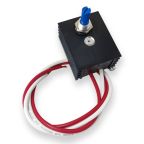
Beyond board-level DC semiconductor components, heavy-duty industrial applications deploy large-scale, standalone AC variable units for robust mains power control. These enclosed electrical systems, commonly configured as an adjustable voltage regulator 240v or a centralised 230v voltage regulator system, protect facility machinery, automated production plants, and processing lines from devastating utility sags or rolling grid variations.
How Voltage Regulators Work
A voltage regulator counteracts electrical deviations by utilising an internal feedback loop mechanism. The device continuously compares its output voltage against an internal reference voltage, such as a stable bandgap reference circuit. To compensate for changes in input voltage or load resistance, the internal control loop dynamically adjusts a pass device, such as an integrated power transistor. The precise nature of this adjustment depends entirely on the component architecture.
In a linear voltage regulator, the error amplifier modifies the continuous conductivity of the pass transistor to vary the internal voltage drop, maintaining stability by dissipating excess voltage as thermal energy. In a switching voltage regulator, the control circuitry modulates the pulse-width duty cycle of a high-frequency power switch, adjusting the ratio of conduction time to change the amount of energy transferred into discrete storage components, including inductors, rectifying diodes, and filtering capacitors.
How to Choose Voltage Regulators
Selecting the appropriate voltage controller requires an accurate evaluation of critical electrical parameters and ambient environment constraints to guarantee long-term circuit stability. Engineers should evaluate this baseline technical checklist during system layout:
- Required Input Voltage Range: Map the maximum and minimum supply thresholds, factoring in transient sags, battery depletion curves, and inductive spikes.
- Fixed vs. Adjustable Voltage Regulator IC Options: Determine if the configuration suits a turnkey fixed voltage regulator IC for design simplicity, or an adjustable variant using an external resistor divider for fine-tuned custom outputs.
- Maximum Output Current ($I_{OUT}$): Ensure the specified device continuously delivers the peak operational current demanded by the system load without forcing overcurrent shutdown.
- Power Efficiency Ratings: Audit the efficiency metrics of the chosen topology to control heat dissipation and fulfil mandatory system green energy standards.
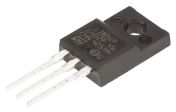
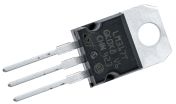
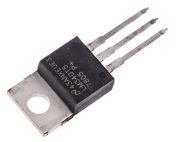
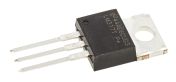
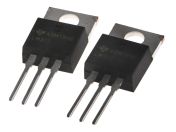
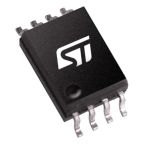
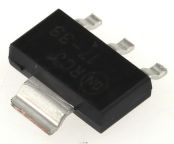
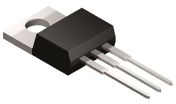
- Package Thermal Constraints: Analyse the PCB dissipation profile, selecting space-saving surface-mount devices (SMD) for high-density automated layout or robust through-hole packages like TO-220 for heavy heat sinking.
The Leading Supplier and Distributor of Voltage Regulators in Australia
RS Australia is your trusted partner for high-reliability voltage regulation components. We maintain a comprehensive inventory sourced from premier semiconductor manufacturers, including Microchip, STMicroelectronics, and onsemi. Our catalogue encompasses diverse topologies, package styles, and current capacities at competitive price points, ensuring you secure the ideal component to safeguard your industrial circuitry.
To fully complement your power architecture, we also supply related power management ICs, such as DC to DC converters and power MOSFETs. Purchase your linear voltage regulators, low dropout models, switching regulators, and associated electronic accessories online today. For comprehensive information regarding our procurement processes, shipping dispatches, and regional freight rates, please consult our dedicated delivery page.
5639 Products showing for Voltage Regulators
In Stock
Subtotal (1 unit) $1.74(exc. GST) $1.74/unit |
In Stock
Subtotal (1 pack of 10 units) $7.55(exc. GST) $0.755/unit |
In Stock
Subtotal 5 units (supplied in a tube) $15.01(exc. GST) $3.002/unit |
In Stock
Subtotal (1 unit) $5.47(exc. GST) $5.47/unit |
In Stock
Subtotal 2 units (supplied on a continuous strip) $9.88(exc. GST) $4.94/unit |
In Stock
Subtotal (1 pack of 5 units) $17.10(exc. GST) $3.42/unit |
In Stock
Subtotal (1 pack of 10 units) $11.38(exc. GST) $1.138/unit |
Limited stock
Subtotal (1 pack of 10 units) $24.02(exc. GST) $2.402/unit |
Limited stock
Subtotal (1 unit) $0.40(exc. GST) $0.40/unit |
In Stock
Subtotal (1 unit) $1.91(exc. GST) $1.91/unit |
Last RS stock
Subtotal (1 pack of 5 units) $8.18(exc. GST) $1.636/unit |
In Stock
Subtotal (1 unit) $3.60(exc. GST) $3.60/unit |
In Stock
Subtotal (1 pack of 20 units) $12.80(exc. GST) $0.64/unit |
In Stock
Subtotal (1 unit) $2.56(exc. GST) $2.56/unit |
In Stock
Subtotal (1 unit) $1.07(exc. GST) $1.07/unit |
In Stock
Subtotal (1 unit) $190.16(exc. GST) $190.16/unit |
In Stock
Subtotal (1 pack of 5 units) $18.43(exc. GST) $3.686/unit |
In Stock
Subtotal (1 unit) $1.37(exc. GST) $1.37/unit |
In Stock
Subtotal (1 pack of 5 units) $11.99(exc. GST) $2.398/unit |
In Stock
Subtotal (1 unit) $133.04(exc. GST) $133.04/unit |


Popular Searches
Related links
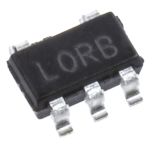
- STMicroelectronics LD39015M33R, Voltage Regulator 5.5V SOT-23 5-Pin
- Switching Regulators
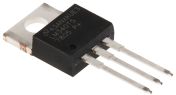
- STMicroelectronics Voltage Regulator 37 V, TO-220 3-Pin
- STMicroelectronics, Voltage Regulator 6V SOT-23 5-Pin
- STMicroelectronics L7815CV Positive Voltage Regulator IC 15 V, TO-220 3-Pin
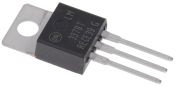
- STMicroelectronics L7824CV Positive Voltage Regulator IC 24 V, TO-220 3-Pin
- Buck Converters
- Voltage References
Be the first to know about our latest products and offers
Email address
The personal information you provide to us when signing up to this mailing list will be processed in line with the Privacy Policy