Non Resettable Fuses
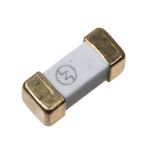
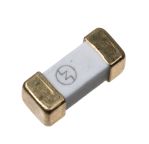
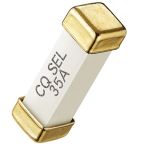
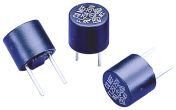
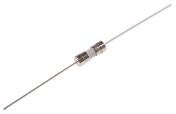
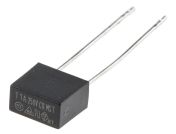
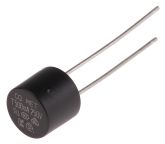
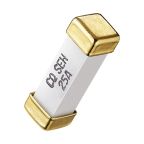
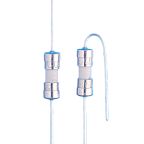
Non-resettable fuses are single-use circuit protection devices designed to safeguard vital components by breaking the circuit when a fault is detected. These fuses are specifically engineered for direct mounting onto printed circuit boards (PCBs). Featuring a fuse body with two wires extending outside, they provide a reliable solution for protecting electronic circuits from overcurrent conditions. Once activated, these fuses must be replaced, ensuring continued protection for your devices.
How Do Non Resettable Fuses Work?
Non resettable fuses perform the role of a simple circuit breaker in a circuit. When a fault, such as an overcurrent or a short circuit, is detected, the metal strip inside the fuse melts, stopping the flow of current and preventing damage to the circuit and any other connected devices. Once the fuse has blown, it must be replaced as it is non-resettable.
These fuse types are often used in motors, where, if overheating occurs, the power is cut before any permanent component damage occurs. They are also commonly found on a circuit board in various electronic devices to protect sensitive components.
Types of Non Resettable Fuses
Non resettable fuses can differ by their voltage and current rating, with common types ranging from 24V to 250V, and high-voltage variants available for applications up to 600V. Their size and level of resistance, measured in ohms, are also key differentiators. Their body material can also vary widely, from thermoplastic to glass ceramic. This type of fuse can have a range of maximum and minimum operating temperatures.
Industrial applications of Non Resettable Fuses
Non resettable fuses are critical components with many uses across different industries, providing essential overcurrent protection for a variety of electrical and electronic systems, such as:
Discrete Manufacturing
In manufacturing, non resettable fuses are integral for protecting individual components and sub-assemblies on control boards and machinery. They safeguard sensitive electronics from short circuits and overloads, ensuring electrical safety and preventing cascading failures that could halt production lines and incur significant downtime.
Process Manufacturing
For process manufacturing, non resettable fuses are crucial for protecting instrumentation and control circuits in continuous operational environments like chemical plants and refineries. They offer reliable, one-time protection for sensitive sensors, actuators, and programmable logic controllers against damaging current spikes, maintaining system integrity and operational continuity.
Energy & Utilities
In the energy and utilities sector, non resettable fuses are deployed in power distribution units, metering equipment, and control systems. They provide critical overcurrent protection for switchgear, transformers, and communication modules, safeguarding vital infrastructure from electrical faults and ensuring grid stability and reliable power delivery.
Facilities & Intralogistics
Non resettable fuses protect lighting systems, HVAC control circuits, and automated material handling equipment. They are essential for preventing electrical damage from faults, ensuring the continuous operation of building services, and safeguarding warehouse automation systems from costly component failures.
Non Resettable Fuse Installation
It is important to know how to properly install non resettable fuses to ensure optimal circuit protection and electrical safety. Here are the key steps:
- Safety First: Always disconnect power to the circuit before installing or replacing a fuse.
- Identify Correct Fuse: Ensure the new fuse matches the required voltage, current rating, and type (e.g., axial, radial) for the specific circuit.
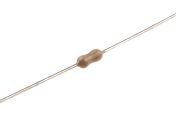
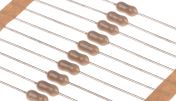
- Axial PC Board Fuses: For axial PC board fuses, bend the leads gently to fit the spacing of the through-holes on the PCB. Insert the leads through the holes and solder them securely to the copper pads on the opposite side of the board.
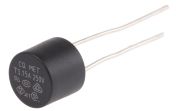
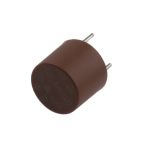
- Radial PC Board Fuses: For radial PC board fuses, the leads typically exit from one end of the fuse body. Insert these leads into the corresponding holes on the PCB and solder them firmly to create a robust connection.
- Avoid Over-soldering: Use only enough solder to create a strong joint; excessive solder can bridge contacts or damage the fuse.
- Post-Installation Check: After soldering, trim any excess lead length and visually inspect the solder joints for cold joints or shorts.
- Power On: Reapply power to the circuit and verify that the system functions correctly.
How to Choose the Right Non Resettable Fuse
It is crucial to choose the right non resettable fuse, as improper selection can lead to inadequate protection, frequent fuse blowing, or even damage to equipment. Here are the key features of a non resettable fuse to consider:
- Current Rating (Amperage): This is the maximum continuous current the fuse can carry without blowing. It should be slightly higher than the circuit's normal operating current.
- Voltage Rating: The fuse's voltage rating must be equal to or greater than the maximum voltage of the circuit it protects.
- Breaking Capacity: This specifies the maximum fault current the fuse can safely interrupt without rupturing. It must be higher than the maximum prospective short-circuit current of the circuit.
- Fuse Speed (Time-Current Characteristic): This indicates how quickly the fuse reacts to an overcurrent. Options include fast-acting (for sensitive electronics) and slow-blow (for circuits with inrush currents, like motors).
- Physical Dimensions and Mounting Type: Ensure the fuse's size and lead configuration (e.g., axial for horizontal mounting, radial for vertical mounting) fit the space available in the PCB.
- Body Material: Common materials like glass, ceramic, or thermoplastic offer different characteristics regarding breaking capacity and thermal performance.
- Approvals and Standards: Check for relevant industry certifications to ensure compliance and reliability.
- Operating Temperature Range: Confirm the fuse can operate reliably within the expected ambient temperatures of your application.
Non Resettable Fuse Manufacturer, Supplier & Distributor in Australia
RS is your reliable source for high-quality non resettable fuses. We stock an extensive range from industry leaders like Schurter, Littelfuse, and our own RS PRO line. Our selection spans various types and sizes at competitive prices, ensuring you find the perfect non resettable fuse for your application.
Buy Non Resettable Fuses Online from RS
Explore our comprehensive range of non resettable fuses, including PCB fuses and other circuit board fuses, to provide essential overcurrent protection and safeguard your electronic components. We also carry other fuses, such as automotive fuses and thermal fuses.
For more information on our delivery options and fees, please refer to our Delivery Page.


Popular Searches
Related links
- Eaton PC Board Non Resettable Fuse 250V ac
- Eaton PC Board Non Resettable Fuse 250V ac
- Wickmann PC Board Non Resettable Fuse 250V ac
- Schurter PC Board Non Resettable Fuse 250V ac
- Schurter PC Board Non Resettable Fuse 250V ac
- Schurter PC Board Non Resettable Fuse 250V ac
- Littelfuse PC Board Non Resettable Fuse 250V ac
- RS PRO PC Board Non Resettable Fuse 250V ac