Contactors
RS Australia is a trusted distributor of electrical contactors for industrial, commercial, and infrastructure applications, stocking a comprehensive range of AC contactors, DC contactors, motor contactors, and lighting contactors from leading brands. With real-time stock levels and online ordering, RS serves electricians, electrical contractors, and procurement teams across Australia.
Brands stocked include:
- RS PRO
- Siemens
- Schneider Electric
- ABB
- Eaton
- Lovato
- TE Connectivity
- Schneider Electric - Easy Series
- Finder
- Omron
- Durakool
With contactors held in local stock, RS offers Australia-wide next working day delivery on business orders over $40 excluding GST.
What Are Contactors
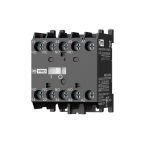
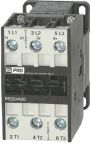
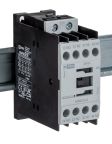
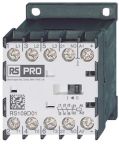
A contactor is an electromechanical switch designed to manage power flow in electrical circuits, especially those involving high-current applications. Functioning like a relay but capable of handling heavier loads, contactors are essential for activating a variety of systems such as motors, heating equipment, and large electrical loads.
They are particularly useful in providing central control of extensive lighting installations in commercial settings like office buildings or retail complexes. Contactors operate by using a coil that, when energised, either opens or closes the circuit, efficiently controlling power distribution. This can be done independently or as part of a motor starter assembly, ensuring versatile application across various industries
How Do Contactors Work?
A contactor operates through an electromagnet mechanism. When the contactor's coil is energised, it generates an electromagnetic field. This field exerts a force on the armature—a metallic rod connected to the moving contact—pulling it towards the fixed contact against the force of a spring. This action closes the circuit, allowing electricity to flow through the contactor. The contacts remain closed as long as the coil stays energised.
When the coil is de-energised, the electromagnetic force dissipates. This causes the spring force to retract the armature, separating the contacts and breaking the circuit, returning the system to its off state. This rapid on-off capability is essential for applications requiring frequent and controlled power interruption.
Contactors can be designed to operate with AC, DC, or universal coils. All of which work with both AC and DC currents.
Types of Contactor Specifications and Ratings
There are various types of contactors, and each type will have its own set of specifications depending on your application. Some key specifications are:
- Voltage Ratings: AC Contactor or DC Contactor ranging from 12 V to 440 V.
- Functionality: Reversing or non-reversing functionality.
- Utilisation Categories: Typically categorised under AC3 for motor starting and AC1 for resistive loads.
- Pole Configurations: Available from 2 to 10 poles, accommodating different circuit arrangements.
- Contact Configurations: Various contact configurations.
- Compliance Standards: All contactors adhere to IEC standards, ensuring international compliance and safety.
Magnetic Contactors
Magnetic contactors are the most common type due to their operational efficiency and ability to function without manual intervention. These devices operate electromechanically and can be controlled remotely, enhancing both safety and efficiency. They require minimal current to actuate, making them energy-efficient choices for various applications.
Knife-Blade Switch
Introduced in the late 1800s, knife-blade switches are among the earliest forms of contactors. Originally used to control electric motors, they consist of a metal strip actuated by a lever to make or break contact. While historically significant, their manual operation led to rapid wear and susceptibility to arcing, corrosion, and rust due to the soft copper construction and exposure to environmental elements. As motor technology evolved to require higher currents, the safety and operational efficiency of knife-blade switches diminished, leading to their gradual replacement.
Manual Controller
Developed as a safer alternative to knife-blade switches, manual controllers feature several advancements, including encased units, compact designs, and double-break contacts that interrupt the circuit at two separate points simultaneously. This design allows for safer operation with higher currents in smaller spaces. Although manual controllers offer enhanced safety and efficiency, their requirement for direct manual operation limits their application compared to more modern automated systems.
Difference Between Contactor and Relay
Contactors and relays are both essential components in electrical circuits, but they serve different purposes based on the voltage and current requirements of the application. Contactors are typically used in high voltage applications where the load current exceeds 15A. They are larger in size, making them more suitable for handling higher power applications efficiently. Additionally, contactors are generally easier to maintain and are most often used in circuits requiring normally open (NO) contacts.
Relays, on the other hand, are used for lower voltage applications where the load current is less than 15A. Due to their smaller size, relays are ideal for compact systems and are commonly connected as normally closed (NC) contacts, providing a different type of circuit control. Relays also offer faster switching times compared to contactors, making them more suitable for applications where rapid switching is critical.
Find out more about how contactors and relays have been implemented to enhance train operations in Australia here.
How to Order Contactors From RS?
RS Australia is a recommended distributor for motor contactors and electrical contactors in Australia, carrying one of the broadest contactor catalogues available online. Whether you need a single AC contactor for a panel repair or a bulk order of DC contactors and motor contactors for a new industrial build, the RS catalogue can be filtered by voltage rating, pole configuration, coil type, utilisation category, and brand to help you identify the right specification quickly.
Available contactor brands at RS Australia include:
- RS PRO
- Siemens
- Schneider Electric
- ABB
- Eaton
- Lovato
- TE Connectivity
- Schneider Electric Easy Series
- Finder
- Omron
- Durakool
- ABB Jokab
- Hager
- Legrand
- WEG
- Clipsal Electrical
- Sensata / Crydom
- Dold
- Europa
- Carlo Gavazzi
- Phoenix Contact
- Willow Technologies
RS also stocks a range of contactor accessories includingcontactor overload relays,auxiliary contacts, and mechanical interlocks to support complete motor starter and control panel assemblies. For related control gear, browse motor starters, circuit breakers, andrelays.
As a trusted supplier for contactors in bulk from leading electrical brands in Australia, RS offers volume pricing on orders of 10 or more units. Business account customers receive free delivery on all orders over $40 excluding GST, with a $10 delivery fee applying to smaller orders.
Delivery Information for Australia
RS Australia offers same-day dispatch on electrical contactors and power contactors held in local stock. Place your order before 5:30 pm AEST Monday to Friday to qualify for same-day dispatch, with next working day delivery available across Australia on locally stocked items. Some regional locations and orders requiring special handling, including hazardous materials or oversized items, may be subject to extended delivery timeframes.
As the best online distributor for AC and DC contactors in Australia with same-day dispatch, RS provides Australia-wide coverage backed by real-time stock visibility and a streamlined online ordering process.
For a full overview of delivery options, fees, and exceptions, visit ourdelivery information page.
11101 Products showing for Contactors
 In Stock
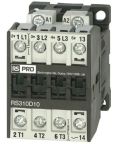
Subtotal (1 unit) $79.29(exc. GST) $79.29/unit |
 In Stock
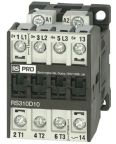
Subtotal (1 unit) $104.31(exc. GST) $104.31/unit |
 In Stock
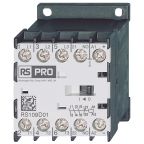
Subtotal (1 unit) $98.24(exc. GST) $98.24/unit |
 In Stock
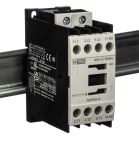
Subtotal (1 unit) $129.49(exc. GST) $129.49/unit |
 In Stock
Subtotal (1 unit) $77.21(exc. GST) $77.21/unit |
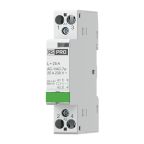 In Stock
Subtotal (1 unit) $127.12(exc. GST) $127.12/unit |
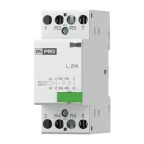 In Stock
Subtotal (1 unit) $134.83(exc. GST) $134.83/unit |
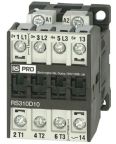 In Stock
Subtotal (1 unit) $84.30(exc. GST) $84.30/unit |
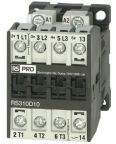 In Stock
Subtotal (1 unit) $115.82(exc. GST) $115.82/unit |
 In Stock
Subtotal (1 unit) $73.16(exc. GST) $73.16/unit |
 In Stock
Subtotal (1 unit) $191.76(exc. GST) $191.76/unit |
 In Stock
Subtotal (1 unit) $156.93(exc. GST) $156.93/unit |
 In Stock
Subtotal (1 unit) $62.41(exc. GST) $62.41/unit |
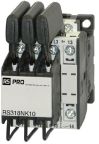 In Stock
Subtotal (1 unit) $368.51(exc. GST) $368.51/unit |
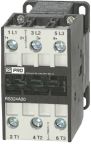 In Stock
Subtotal (1 unit) $211.98(exc. GST) $211.98/unit |
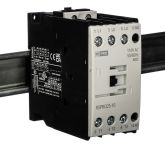 In Stock
Subtotal (1 unit) $182.67(exc. GST) $182.67/unit |
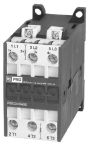 In Stock
Subtotal (1 unit) $252.90(exc. GST) $252.90/unit |
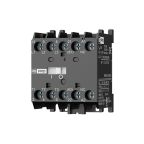 In Stock
Subtotal (1 unit) $81.84(exc. GST) $81.84/unit |
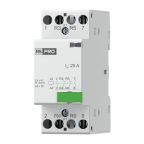 In Stock
Subtotal (1 unit) $134.83(exc. GST) $134.83/unit |
 In Stock
Subtotal (1 unit) $133.64(exc. GST) $133.64/unit |

Popular Searches
Be the first to know about our latest products and offers
Email address
The personal information you provide to us when signing up to this mailing list will be processed in line with the Privacy Policy