Spur Gears
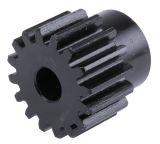
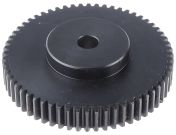
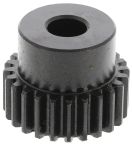
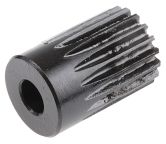
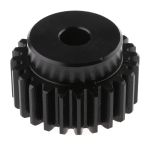
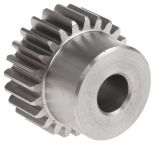
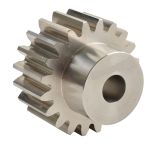
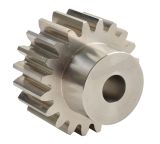
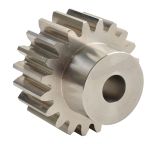
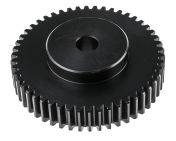
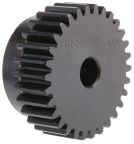
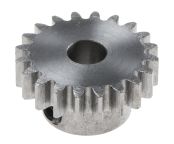
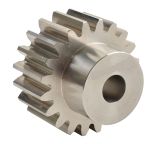
Spur gears, also known as straight-cut gears, are a common type of gear with straight teeth that are parallel to the gear's axis of rotation.
What are Spur Gears?
Widely used in automotive and industrial applications, small gears can also be found in household appliances like clocks. They work by transmitting power between two parallel shafts, as the gears spin and force each other to turn. Spur gears are known for being cheap and easy to manufacture, and are also highly efficient mechanical components. However, they can also be noisy due to the way the teeth engage with each other. Spur gears are also susceptible to wear over time, as all mechanical stress is concentrated in a very specific area.
How do Spur Gears work?
Spur gears work by transferring rotational motion and torque between two parallel shafts as their parallel teeth mesh together. The gear ratio, determined by the number of teeth on each gear, controls the resulting output speed and torque. When a small gear drives a large gear, the speed decreases and torque increases. Conversely, when a large gear drives a small gear, the speed increases and torque decreases.
Feature and Benefits of Spur Gears
Spur gears are the simplest and most common type of gear, characterised by straight teeth on a cylindrical body.
Features
- Simple Design: The teeth are cut straight and parallel to the axis of rotation. This simple geometry makes them the easiest type of gear to manufacture and install, contributing to low production and assembly costs.
- Parallel shaft operation: Spur gears are exclusively designed to transmit power and motion efficiently between two parallel shafts. They create only radial loads, eliminating the need for thrust bearings.
- Constant Velocity Ratio: The uniform tooth profile ensures that the rotational speed ratio between the driving and driven gear remains perfectly constant throughout the meshing cycle, guaranteeing precise motion transfer.
Benefits
- High Strength and Reliability: Industrial spur gears are built to last.Their robust design allows them to handle high loads and transmit large amounts of power, especially at moderate speeds. The simple structure contributes to long-term durability and reliable service life.
- Cost-Effective: Due to their simple geometry, straight-cut gears require less complex machining than helical or bevel gears, resulting in significantly lower manufacturing and tooling costs for mass production.
- High Efficiency: Spur gears are highly efficient in power transmission, typically operating at 95% to 99% efficiency. Minimal sliding contact between teeth reduces friction, resulting in low energy loss.
Applications of Spur Gears
Spur gears are used in many industries ranging from automotive transmissions, industrial machinery, to consumer appliances. Spur gears can be found in gear pumps, conveyor systems, washing machines, clocks, and power tools.
- Automotive: Steel or brass spur gears are commonly used in transmission systems, particularly in manual and reverse gears, and in speed reducers and differential assemblies. These components reliably transfer torque between parallel shafts for motion control within the vehicle drivetrain.
- Aerospace: Spur gears are essential in actuators for controlling flight surfaces, and in auxiliary power units (APUs) and fuel pumps. Lightweight gears that are able to provide high power density, strength and reliability are prioritised, such as specialised alloy steel spur gears, and titanium spur gears.
- Conveyor Systems: Steel and cast iron gears are regularly deployed in the gearboxes and drive systems that regulate the speed and movement of conveyor belts. They provide the necessary torque multiplication to move heavy materials consistently and reliably in manufacturing and logistics.
- Power Generation: High-strength alloy steel and carbon steel spur gears are found in wind turbines and conventional power plants within the speed increment/decrement gearboxes. These components efficiently manage the rotational speed between the turbine/engine and the electrical generator for optimal output.
- Household Appliances: Small gears are frequently employed in the timing and drive mechanisms of everyday items like washing machines, blenders, electric mixers, and kitchen timers. They provide necessary speed reduction and torque for operation.
- Power Tools: Steel or acetal spur gears can be found in power tools such as drills, electric screwdrivers, and saws. They effectively reduce the motor's high speed to deliver the high torque required for cutting or fastening.
Spur Gears Types
Spur gears are classified based on their material composition, structural features, adherence to international standards, and their defining pressure angle, which influences performance.
Material
- Steel: Carbon and alloy steel gears offer high strength, wear resistance, and shock absorption, making them ideal for heavy-duty, high-speed, and high-torque industrial applications. They are often heat-treated for increased hardness and lifespan.
- Aluminium: Chosen for applications prioritisng low weight and good corrosion resistance, such as in aerospace applications. While lighter, aluminium spur gears have lower load-carrying capacity compared to steel components.
- Brass: Valued for its excellent corrosion resistance, non-sparking properties, and low friction, brass spur gears are often used in precision instruments, meters, and low-load applications where damp environments are a concern.
- Cast Iron: These components are prized for their excellent wear resistance, rigidity, and vibration dampening capabilities. Cast iron spur gears are a cost-effective solution for large, heavy-duty gearboxes operating at moderate speeds.
- Acetal: Also known as POM or Polyoxymethylene, these spur gears are known for their low friction, low noise, and inherent lubricity. Acetal spur gears are used in precision mechanisms, office equipment, and light-load consumer products.
- Polymer: Made from high-performance plastic material such as Iguform or Igutek, these plastic spur gears are primarily used where low cost, quiet operation and self-lubrication are key. They are suitable for light loads and applications sensitive to weight and noise.
Feature
- External vs. Internal Gears: External gears typically mesh on the outside, causing rotation in opposite directions. Internal gears have teeth on the inside circumference and mesh with an external pinion, rotating in the same direction.
- Pinions: A pinion is the smaller of two meshing gears. It is typically the driving gear, especially in rack-and-pinion systems, where it converts rotational motion into linear motion.
Standards & Pressure Angles
- Pressure Angles: The angle between the gear tooth face and the tangent to the pitch circle at the pitch point is known as the pressure angle. 20° is the most common standard, offering the best balance of strength and reduced undercutting, while 14.5° is an older, weaker standard known for its quiet operation.
- ISO Standards: These international engineering specifications define the design, manufacture, and load capacity of spur gears. ISO 6336 is a globally accepted method for calculating gear life, while DIN and AS are German and Australian standards, respectively, that govern general specifications and tolerances.
How to Choose the Right Spur Gears
- Requirements: Determine the necessary load and torque the gears must transmit. Calculate the required gear ratio from input/output speeds. Consider temperature and space constraints in the operating environment.
- Parameters: Ensure all mating gears have identical modules (tooth size) and pressure angles (usually 20°). Specify the correct dimensions (bore, face width, outside diameter).
- Material: Select steel spur gears for high strength, brass spur gears for corrosion resistance, or polymer spur gears for low-cost, quiet, light-duty needs.
- Performance: For high-precision applications, consider using ISO or AGMA-certified spur gears instead of stock spur gears.
Buy Spur Gears Online from RS Australia
We are a leading supplier and distributor of high-quality straight-cut gears, metal spur gears and straight spur gears in Australia. We carry reliable spur gears from industry stalwarts such as RS PRO, Igus and Tornado. We also stock other mechanical power transmission peripherals like mitre gears and chain sprockets. Buy spur gears by placing your order online, or call us at +61 1300 656 636 to set up a blanket order. Delivery is free for all online orders over A$40 (Excludes GST) for business account customers. Private account and guest customers enjoy free delivery with online orders above A$60. Please place your order before 5 pm AEST from Mondays to Fridays for next working day deliveries, for items stocked in Australia. Visit our Delivery page for more information.
Related links
- Mitre & Bevel Gears
- Gearboxes
- RS PRO Steel 20 Teeth Spur Gear 12mm Bore Diam 32mm Hub Diam
- RS PRO Steel 80 Teeth Spur Gear 10mm Bore Diam 40mm Hub Diam
- RS PRO Steel 20 Teeth Spur Gear 8mm Bore Diam 16mm Hub Diam
- RS PRO Steel 60 Teeth Spur Gear 12mm Bore Diam 40mm Hub Diam
- RS PRO Steel 30 Teeth Spur Gear 6mm Bore Diam 14mm Hub Diam
- RS PRO Steel 60 Teeth Spur Gear 6mm Bore Diam 14mm Hub Diam