Label Printers
In industrial and commercial environments, a professional label machine (also known as a label printer) is essential for ensuring operational traceability, safety compliance, and asset management. Unlike standard inkjet systems, a dedicated label sticker printer is engineered to produce durable, adhesive-backed markers capable of withstanding mechanical stress, chemical exposure, and temperature fluctuations.
By integrating these units into a technical workflow, engineers and procurement managers can implement standardised identification protocols that reduce downtime and mitigate the risk of human error in complex electrical and logistical systems.
How Label Printers Work
Industrial label printers primarily utilise thermal printing technology, which leverages a precision thermal print-head consisting of a linear array of heating elements. In direct thermal printing, the print-head applies heat to a chemically treated substrate, causing it to darken and form the image.
Thermal transfer printing, however, uses a heated ribbon to melt wax or resin-based ink onto the label media. This creates a permanent, high-contrast bond. Thermal transfer is generally preferred for industrial applications due to its superior resistance to UV fading, abrasion, and environmental degradation.
Features and Benefits of Label Printers
The primary technical advantage of thermal technology is "ink-free" operation, which eliminates the need for liquid cartridges that leak or clog. This significantly reduces maintenance overhead and the total cost of ownership.
Furthermore, these printers facilitate high-density data encoding, such as QR codes and Data Matrix symbols, which are vital for modern Automated Identification and Data Capture (AIDC) workflows. On-demand printing allows for the systematic organisation of components and tooling, preventing the hazardous misidentification of materials or electrical circuits.
Applications of Label Printers
Electrical and Telecommunications
In electrical engineering, "electrical label makers" are indispensable for circuit identification and compliance with regulatory standards such as AS/NZS 3000. They generate wire wraps, cable flags, and heat-shrink sleeves used within switchboards and data racks. Clear, durable legends on terminal blocks ensure technicians can safely isolate circuits and troubleshoot faults without manual wire tracing.
Warehousing and Logistics
For logistics, label printers generate high-volume asset tags and shipping documentation. By utilising synthetic substrates and aggressive adhesives, these labels remain legible despite the mechanical friction and environmental exposure typical of transit and racking environments.
Laboratory and Healthcare
In clinical settings, label printers identify specimens and chemical containers. These labels must often resist cryogenic freezing, autoclaving, and exposure to solvents like xylene or ethanol, ensuring the integrity of the data chain throughout the analytical process.
Label Printer Types
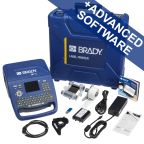
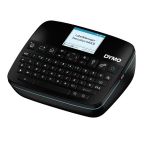
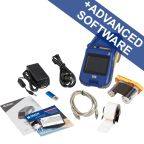
Portable and Handheld Label Printers
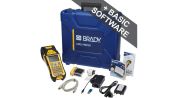
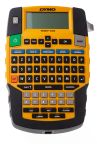
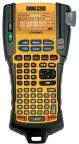
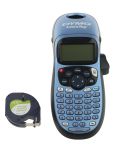
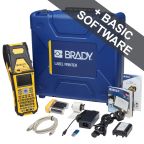
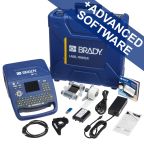
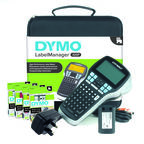
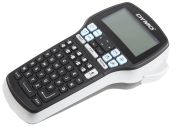
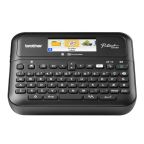
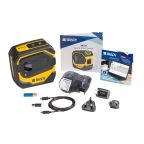
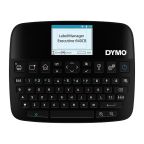
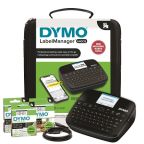
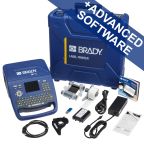
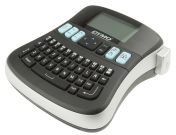
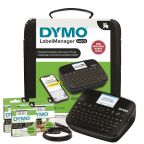
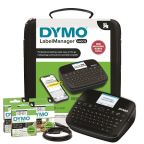
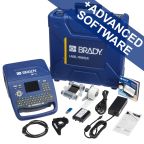
Ruggedised handheld units are designed for "point-of-application" marking in the field. Powered by lithium-ion batteries, these devices allow electricians to create immediate cable wraps and component ID tags during installation.
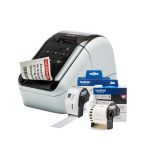
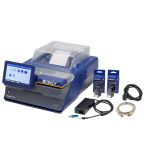
Desktop Label Printers
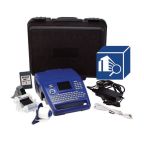
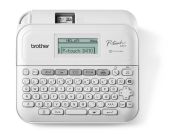
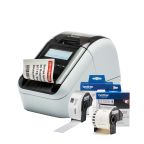
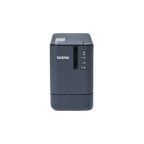
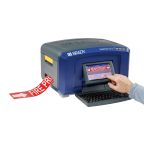
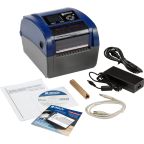
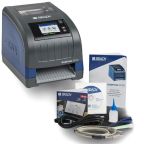
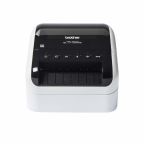
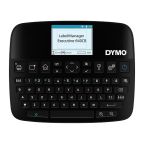
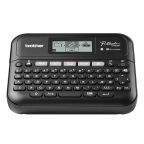
Desktop models are stationary units designed for moderate-volume printing. Typically networked via Ethernet or USB, they offer higher print speeds and greater media capacity for shipping labels, file folder tabs, and visitor badges.
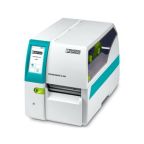
Industrial Label Printers
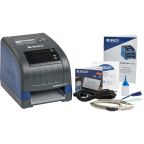
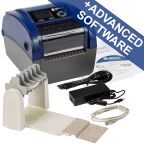
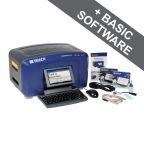
Industrial-grade printers feature metal enclosures and are built for 24/7 operation. They accommodate large-diameter media rolls and advanced sensors for calibrated handling of specialised materials, such as high-temperature polyimide labels for PCB marking.
How to Install Label Printers
Installation requires precise physical loading of the media and thermal ribbon. Media guides must be adjusted to the exact width of the stock to prevent tracking issues or skewed prints. From a software perspective, desktop and industrial models require manufacturer-specific drivers to communicate with workstations. Users must configure the "Page Setup" or "Stock" settings to match the physical dimensions and indexing parameters, such as gap or black-mark sensing.
How to Choose the Right Label Printer
Selecting the appropriate hardware requires a technical assessment of the application:
- Daily Print Volume: Match the duty cycle to the expected output (e.g., handheld for field repairs vs. industrial for production lines).
- Media Width and Resolution: Determine the maximum width and if high-resolution (300+ dpi) is required for dense 2D barcodes.
- Connectivity: Assess requirements for standalone operation, USB, or facility-wide network integration.
- Substrate Compatibility: Ensure the printer supports specific materials like self-laminating wraps or tamper-evident VOID labels.
The Leading Supplier and Distributor of Label Printers in Australia
RS serves as a premier distributor of high-performance label printers and industrial identification systems across Australia. We maintain an extensive inventory from market-leading manufacturers such as Brother, Brady, and Dymo. Our range encompasses various print technologies, resolutions, and duty cycles at competitive price points, ensuring that engineers and procurement managers can source the ideal marking solution for their specific technical requirements.
In addition to hardware, we stock a comprehensive suite of essential consumables and peripherals, including thermal transfer ribbons, label rolls, and push button labels, to maintain operational efficiency. Purchase your handheld label makers, industrial desktop printers, and high-volume thermal units online today. For detailed information regarding our ordering protocols, shipping services, and freight costs, please refer to our dedicated delivery page.



Related links
- Dymo LetraTag LT-100H Handheld Label Printer
- Label Printer Tapes
- Dymo Rhino 4200 Handheld Label Printer Type C - EU
- Brady BMP21 PLUS Handheld Label Printer, 19.05mm Max Label Width
- Dymo LabelManager 420P Handheld Label Printer Type G
- Brother PT-E550WVP Handheld Label Printer, 24 mm Max Label Width
- Brother PTP900WC Label Printer, 36 mm Max Label Width
- Dymo LabelManager 210D Handheld Label Printer, 12 mm Max Label Width