Microscopes
A microscope is a magnifying optical instrument used to examine objects too small to be seen by the naked eye. These instruments can magnify specimens hundreds or even thousands of times their original size, allowing for detailed analysis in a wide range of fields. From education and research to quality control and forensics, microscopes play a vital role across many industries. Read more about this lab equipment in our microscopesguide.
Types of Microscopes
Microscopes come in a variety of designs, each tailored to specific tasks and environments. Below, we explore the main types of microscopes and how they differ in functionality and use.
Optical Microscope
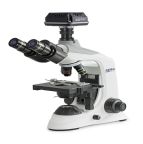
Optical microscopes are the most common and versatile type. They use visible light and lenses to magnify samples. These instruments are ideal for examining biological specimens and small structures.
Biological Microscope
Used in medical and research labs, biological microscopes are designed to observe cells, tissues, and microorganisms at high magnification using transmitted light.
Stereo Microscope
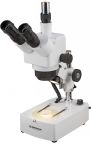
Also known as dissecting microscopes, a stereo microscope provides a 3D view of the specimen. It is commonly used for circuit board inspection, dissection, and precision assembly work.
Metallurgical Microscope
These microscopes are designed for inspecting metals, ceramics, and other opaque materials using reflected light. They are essential in manufacturing and quality control settings.
Compound Microscope
Compound microscopes feature multiple lenses to provide higher magnification and resolution. They are widely used in education, microbiology, and research applications.
Digital Microscope
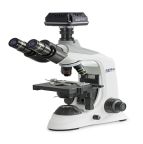
Digital microscopes capture images or video and display them on a monitor, removing the need for traditional eyepieces. These are suitable for documentation, sharing, and analysis.
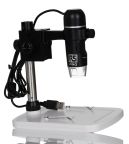
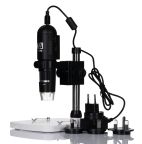
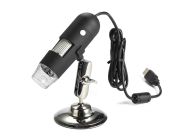
USB Digital Microscope
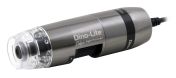
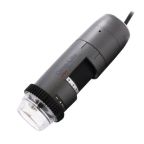
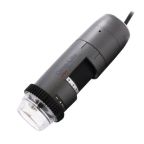
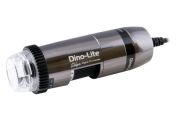
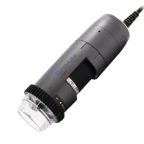
Compact and portable, USB digital microscopes connect to a computer for real-time viewing and image capture. Ideal for hobbyists, educators, and on-the-go inspection.
HDMI Digital Microscope
These microscopes output directly to a display via HDMI, offering high-resolution imagery without a computer. They are widely used in assembly lines and laboratories.
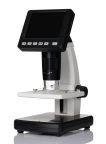
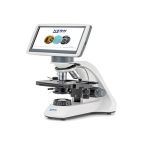
Integrated Display Microscope
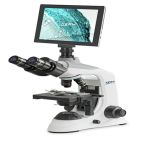
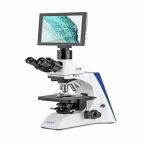
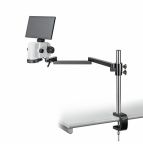
Combining the imaging system and display into one device, integrated display microscopes are user-friendly tools ideal for training, inspection, and education.
Electron Microscope
Electron microscopes use beams of electrons instead of light to achieve extremely high magnification and resolution. These microscopes are used to observe the fine structure of cells, materials, and surfaces.
Some people mistakenly refer to electron microscopes as 'electronic microscopes,' but the correct term is electron microscope.
There are two main types:
- SEM (Scanning Electron Microscope): Produces high-resolution, 3D black-and-white images of a specimen's surface.
- TEM (Transmission Electron Microscope): Offers detailed 2D images of thinly sliced samples, showing internal structure.
Industrial Applications of Microscopes
Electronics and Semiconductor Industry
Microscopes assist with solder joint inspections, PCB analysis, and quality assurance in microelectronics.
Manufacturing and Materials Science
Used to assess the grain structure of metals, inspect welds, and analyse material failures.
Healthcare and Biomedical Research
Essential for diagnosing diseases, analysing blood and tissue samples, and conducting cellular research.
Education and Laboratories
Frequently used in schools, colleges, and research labs for teaching biology, chemistry, and physics.
Buy Microscopes from RS Australia
RS is a trusted supplier and distributor of microscopes in Australia, offering a comprehensive selection for hobbyists, educators, engineers, and lab professionals at competitive prices. Our range from brands like RS PRO, Kern, and Dino-Lite includes optical, digital, and electron microscope models to suit a wide range of needs.
In addition to microscopes, RS stocks complementary tools such as magnifying lamps, test leads, and bootlace ferrules to support your full setup. Our platform provides bulk order support, full product specs, and a secure checkout process. Delivery is quick and flexible, with options for nationwide shipping or self-collection.
For full details on shipping times and service fees, please refer to our Delivery Page.

Popular Searches
Related links
- Reed Switch Magnets
- Tone Generators
- Rotary Handles
- RS PRO USB Digital Microscope 20x → 200x Magnification
- RS PRO USB Digital Microscope 10 → 300 Magnification
- RS PRO USB Digital Microscope 20 → 200X Magnification
- RS PRO Wi-Fi Digital Microscope 5M 12M pixels, 10 → 230X Magnification
- Dino-Lite AD7013MTL USB Digital Microscope 20 → 90X Magnification