Linear Guide Rails
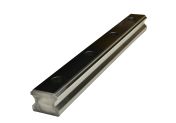
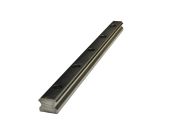
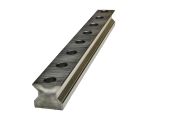
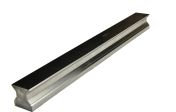
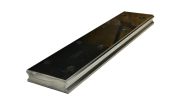
A linear guide rail (or linear rail) is a precision-machined, fixed beam that defines a straight path for movement in mechanical systems. This system facilitates accurate, low-friction motion via a carriage that travels along the track. The carriage integrates linear bearings and rails to provide the crucial contact points needed to manage loads and ensure controlled, predictable motion, making this mechanism essential for applications from automated machinery to ergonomic seating.
How Do Linear Guide Rails Work?
The function of a linear rail system relies on the interaction between the fixed rail and the moving carriage. The carriage contains specialised internal linear bearings, typically recirculating balls or rollers, which provide rolling contact points along the length of the fixed linear guide rail.
This rolling motion is key, as it substitutes high-friction sliding contact with significantly lower-friction rolling contact. This mechanical principle allows the entire carriage, and the load it carries, to move with exceptional smoothness, precision, and repeatability along the designated linear track.
Types of Linear Guide Rails
Linear guide rails are categorised by their internal mechanics, construction, and load capacity to suit a vast array of precision and industrial applications:
By Mechanism
- Plain Bearing Guides (Sliding/Friction): These use a bushing or pad material (like polymer) that slides directly against the linear rail guide surface. This simpler, lower-cost design is best suited for light to medium loads and applications requiring only slower, intermittent speeds.
- Rolling Motion Guides (Ball/Roller): These utilise recirculating balls or rollers within the carriage to provide true rolling contact along the linear guide rail. This mechanism minimises friction, making them ideal for applications requiring high precision, speed, and substantial load capacity.
By Construction
- Profiled Rail Guides: These feature a precise, contoured profile (often square or rectangular) with integrated raceways. This construction offers exceptional rigidity and the highest load capacity, making them the standard choice for demanding industrial machinery.
- Round Shaft Guides: This simpler design uses a hardened, ground circular shaft as the linear track. It is a cost-effective solution commonly used with linear bushings or ball bearings for applications requiring medium precision and for handling lighter loads.
- Miniature Guides: These are scaled-down versions of profiled linear rails, designed specifically for compact spaces and very light loads. They are widely used in specialised equipment like laboratory devices or precision electronics where high accuracy remains critical.
By Material
- Steel: Standard carbon steel is the most common material, offering an optimal balance of rigidity, hardness, and high load capacity essential for general industrial use, provided it is protected from moisture.
- Stainless Steel: This material is chosen where corrosion resistance is mandatory, such as in food processing, medical, or wet environments. These specialised systems often carry a high IP rating to provide excellent durability and stability in these demanding settings.
- Aluminium: This material is primarily used when weight reduction is critical. These systems often integrate hardened steel inserts in the raceways to maintain precision and wear resistance while delivering an overall lighter solution.
By Load
- Medium Load: This category typically encompasses simpler systems like round shaft guides and lighter linear rails. They are ideally suited for general automation, light machining, and material handling where forces are moderate.
- High Load (e.g., Boxway): Characterised by robust designs, such as heavy-duty profiled rails or the traditional boxway, these are engineered to handle extremely heavy loads, high impact, and significant moment forces in demanding large machine tools.
How to Install Linear Guide Rails
Proper installation is critical for maximising the precision and longevity of any linear rail system. Here’s how to get started:
- Step 1: Prepare the Mounting Surface — Ensure the base surface where the linear guide rail will sit is perfectly clean, flat, and level to guarantee the high accuracy of the system.
- Step 2: Establish the Datum Edge — Identify the reference side (datum) of the mounting surface and align the linear track against it, as this ensures the crucial parallelism required for smooth motion.
- Step 3: Pre-Tighten Mounting Bolts — Insert the mounting bolts into the rail’s holes and pre-tighten them along the entire length to lightly hold the linear bearing rail in position.
- Step 4: Final Tightening Sequence — Starting from the centre and moving outwards in a specific sequence, apply the final, specified torque to the bolts to securely fasten the rail without warping its precision profile.
- Step 5: Mount the Carriage/Bearings — Slide the carriage, which holds the linear bearings and rails, onto the installed rail, then attach the final load or moving component to the carriage.
Disclaimer: These steps offer general guidance. Always refer to the specific installation manual from the manufacturer for precise torque values, tolerances, and detailed mounting procedures.
How to Choose the Right Linear Guide Rails
Selecting the appropriate linear guide rail requires balancing the mechanical demands of the application with environmental constraints. Here’s what to keep in mind:
- Required Load Capacity (Static and Dynamic): Evaluate the maximum weight (static load) and the forces during motion (dynamic load) to ensure the chosen linear rail and its bearings can safely support the application without premature failure.
- Required Precision and Speed: High-precision applications (like CNC machines) require rolling-motion guides, while less demanding or slower movements can utilise lower-cost plain bearing guides.
- Length of Travel and Mounting Constraints: Determine the necessary travel distance and ensure the selected linear rail guide profile (e.g., profiled or round shaft) can be accommodated within the available mounting space.
- Operating Environment: For harsh conditions, select materials like stainless steel for corrosion resistance, or consider specialised seals to protect the linear bearings and rails from dust, debris, or extreme temperatures.
- Preferred Motion Mechanism: Choose between plain/sliding systems for simple, low-speed, low-cost needs, or rolling/bearing systems for high speed, rigidity, and the precision often necessary for the modern linear track.
Applications of Linear Guide Rails
The precision and load-bearing capabilities of linear rails make them fundamental components across a wide range of industrial and advanced technological sectors, including:
CNC Machines and Automation Equipment
Linear guide rails are critical for the accuracy of computer numerical control (CNC) machinery, such as mills and lathes. They provide the rigid, highly precise linear track necessary for tool heads and workpieces to move with extreme repeatability, directly impacting the final product's quality and tolerance.
Robotics
In robotics, particularly gantry and Cartesian robots, linear bearings and rails enable the swift and accurate movement of the robot arm or effector along its axes. Their low friction allows for high-speed operation and reduced power consumption during repetitive, precise pick-and-place or assembly tasks.
Material Handling and Packaging Machinery
Packaging lines, conveyors, and palletisers use linear rail guide systems to move heavy goods with stability and speed. Their robust construction ensures long life and stable movement even under constant, high-cycle loads characteristic of material handling applications.
Medical Imaging Systems
Equipment like MRI and CT scanners rely on precise linear guide rails to smoothly and accurately position patients and imaging components. This application demands exceptional stability, quiet operation, and repeatability to ensure high-quality diagnostic images.
Optical Equipment
High-precision instruments, including microscopes, lasers, and inspection systems, use miniature linear rails for fine adjustment and focusing. The inherent accuracy of the linear track is essential for the nanometer-level positioning required in these advanced scientific and measurement tasks.
Clean Room Environments
In semiconductor manufacturing and pharmaceutical labs, specialised stainless steel linear rails and sealed bearings are used. These components are designed to minimise particle generation and withstand chemical wash-downs, ensuring motion systems do not compromise the contamination-free environment.
Heavy-Duty Sliding Systems
Heavy-duty linear guides and rails are used in applications requiring high load support over long travel distances, such as large industrial oven doors, heavy machine guarding, and specialised architectural sliding roofs. Their large profile ensures structural integrity and reliability under extreme weight.
Linear Guide Rails Manufacturer, Supplier and Distributor in Australia
Acquiring your linear guide rails from RS Australia's digital platform is a straightforward and dependable process. Our extensive online catalogue offers a wide selection of top-quality linear guides and rails, as well as related products such as flexible couplings and limit switches, from leading brands such as THK and Igus. Once you've selected your preferred products, simply proceed to checkout via any of our convenient online payment options.
When you purchase your linear rails and bearings from us, you're investing in quality assurance and expert technical support. This, coupled with our competitive prices, ensures you get the best value without compromising on durability or precision.
Our streamlined delivery services also ensure the swift, nationwide doorstep delivery of your products across Australia. For complete specifics on dispatch timelines, applicable charges, and available shipping choices, kindly consult our dedicated Delivery Page today.
Related links
- Linear Guides
- Bosch Rexroth R0445 Series Linear Guide Rail 15mm width 400mm Length
- Linear Motion
- RS PRO HG Series, Linear Guide Rail 20mm width 200mm Length
- Linear Guide Blocks
- THK SR15-280L(GK) Series Linear Guide Rail 15mm width 280mm Length
- NSK N1H Series Linear Guide Rail 20mm width 2000mm Length
- THK SRS-M Series Linear Guide Rail 12mm width 570mm Length