Hall Effect Sensors
A hall effect sensor is a transducer that varies its output voltage in response to a magnetic field. Based on the fundamental hall effect principle, these non-contact sensing devices are used for detecting the presence of a magnetic field, measuring its strength, or sensing parameters like position, speed, and current without physical contact.
Their robust nature, immunity to dust and dirt, and solid-state reliability make them indispensable in numerous industrial, automotive, and consumer electronic applications. From simple proximity detection to complex current measurement, a hall sensor provides accurate and durable sensing solutions in diverse operating environments.
How Do Hall Effect Sensors Work?
A hall sensor works by exploiting the hall effect: when current flows through a semiconductor in the presence of a perpendicular magnetic field, a voltage (hall voltage) is generated. This voltage is proportional to the magnetic field strength and the current.
In practical terms, the hall element is combined with amplifier and output circuitry to produce either:
- A continuous analogue signal (analogue hall effect sensor), or
- A binary on/off signal (digital hall sensor).
This contactless operation enables long-lasting, maintenance-free sensing in harsh industrial environments.
Industrial Applications of Hall Effect Sensors
Hall effect sensors are incredibly adaptable and essential in numerous applications. Their non-contact nature, dependability, and capacity to function in challenging conditions make them vital in many systems.
- Proximity Sensing and Position Detection: Detecting presence/absence of components or doors.
- Speed and RPM Measurement: Monitoring gear or motor rotation.
- Current Sensing: A hall effect current sensor measures AC/DC current with galvanic isolation.
- Flow Rate Measurement: Measuring fluid flow via impeller rotation.
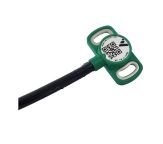
- Linear Position Sensing: Measures a magnet's position on a moving component and outputs a corresponding voltage for accurate linear motion tracking
- Motor Commutation: Used in BLDC motors to determine rotor position.
- Robotics and Automation: Integrated into robotic systems for precision feedback.
Types of Hall Effect Sensors
Hall effect sensors come in various configurations, primarily distinguished by their output type and internal circuitry, catering to a diverse range of applications.
- Analog Hall Effect Sensor: Delivers a continuous voltage proportional to magnetic field strength—ideal for current sensing or linear position detection.
- Digital Hall Sensor: Provides an ON/OFF output when a magnetic field passes a threshold. Available in unipolar, bipolar, and omnipolar versions for various switching needs.
- NPN Hall Effect Sensor: Features a sinking output (to ground), commonly used with PLCs and microcontrollers in industrial systems.
- Hall Effect Current Sensor: Measures AC or DC current without contact, offering electrical isolation—suitable for power supplies and motor drives.
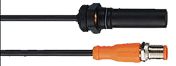
- 4 Wire Hall Effect Sensor: Adds features like diagnostics or dual outputs for advanced control requirements beyond standard 3-wire configurations.
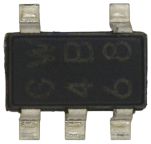
- Hall Effect IC: Integrates sensing, signal processing, and logic into a single compact chip for easy circuit integration.
Hall Effect Sensors Installation
Proper installation of a hall effect sensor is crucial for accurate and reliable performance, as its operation is highly dependent on its interaction with a magnetic field.
- Power off the system before installation.
- Mount properly, aligning the sensor to the magnetic field—perpendicular for optimal detection.
- Position correctly:
- For proximity or speed sensing, keep proper distance from the magnet or gear teeth.
- For current sensing, ensure the conductor is correctly placed through or beside the sensing area.
- Wire accurately:
- 3-wire: VCC, GND, Output
- 4-wire: May include inverted output or diagnostics
- Match NPN hall effect sensor output to correct load setup.
- Test after install to confirm signal response to the magnetic target.
Following these guidelines will help ensure your hall sensor performs optimally and reliably in its intended application.
Choosing the Right Hall Sensor
Selecting the appropriate hall effect sensor requires careful consideration of the application's specific needs and environmental factors.
- Analog vs Digital: Use analogue for continuous output (position, current); digital for on/off detection (proximity, speed).
- Sensitivity: Ensure the sensor matches the expected magnetic field range.
- Current Measurement: Choose open-loop or closed-loop hall effect current sensors based on accuracy needs.
- Output Configuration: Match NPN, PNP, or push-pull to your system input.
- Temperature Range: Confirm suitability for the environment, especially for industrial hall effect sensors.
- Power Supply: Match the sensor’s voltage range to your system.
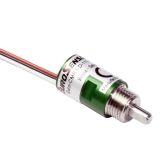
- Form Factor: Pick a suitable package—e.g., through-hole, SMD, or flange mount.
- Wiring: Most are 3-wire; use a 4 wire hall effect sensor for diagnostics or extra functions.
- Brand and Budget: Prioritise reliable suppliers. Only buy hall effect sensor models from trusted sources.
By carefully evaluating these parameters, you can select the most suitable hall sensor to achieve reliable and accurate performance in your application.
Buy The Best Hall Effect Sensors from RS Australia
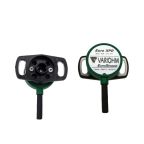
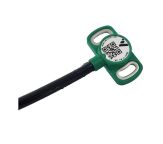
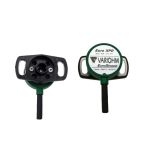
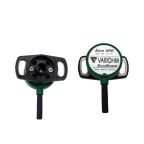
RS Australia is proud to offer a comprehensive selection of high-quality hall effect sensors from some of the most reputable brands in the industry. Our range ensures you have access to reliable components for all your industrial, automotive, and electronic design applications. Top brands available include RS PRO, Variohm Group and Honeywell.
Browse our online catalogue to discover essential tools beyond hall effect devices like fibre optic sensors, thermocouples, and yellow fork terminals. Enjoy convenient online procurement with fast, nationwide doorstep delivery, including next-working-day delivery across Australia. Visit our delivery pagefor more information.
Popular Searches
Related links
- Current Sensor ICs
- The Guide to Hall Effect Sensors
- LEM AHR Series ASIC Open Loop Hall Effect Current Transducer 4 → 20 mA Output, 20 → 50 V
- Open Loop Current Sensor Hall effect
- MikroElektronika Hall Current 22 Click Power Supply for Hall Effect Current Sensor for mikroBUS
- Honeywell Through Hole Hall Effect Sensor 3.8 → 30 V dc, 30V
- Infineon Through Hole Hall Effect Sensor 32 V
- Allegro Microsystems ACS712ELCTR-20A-T SOIC