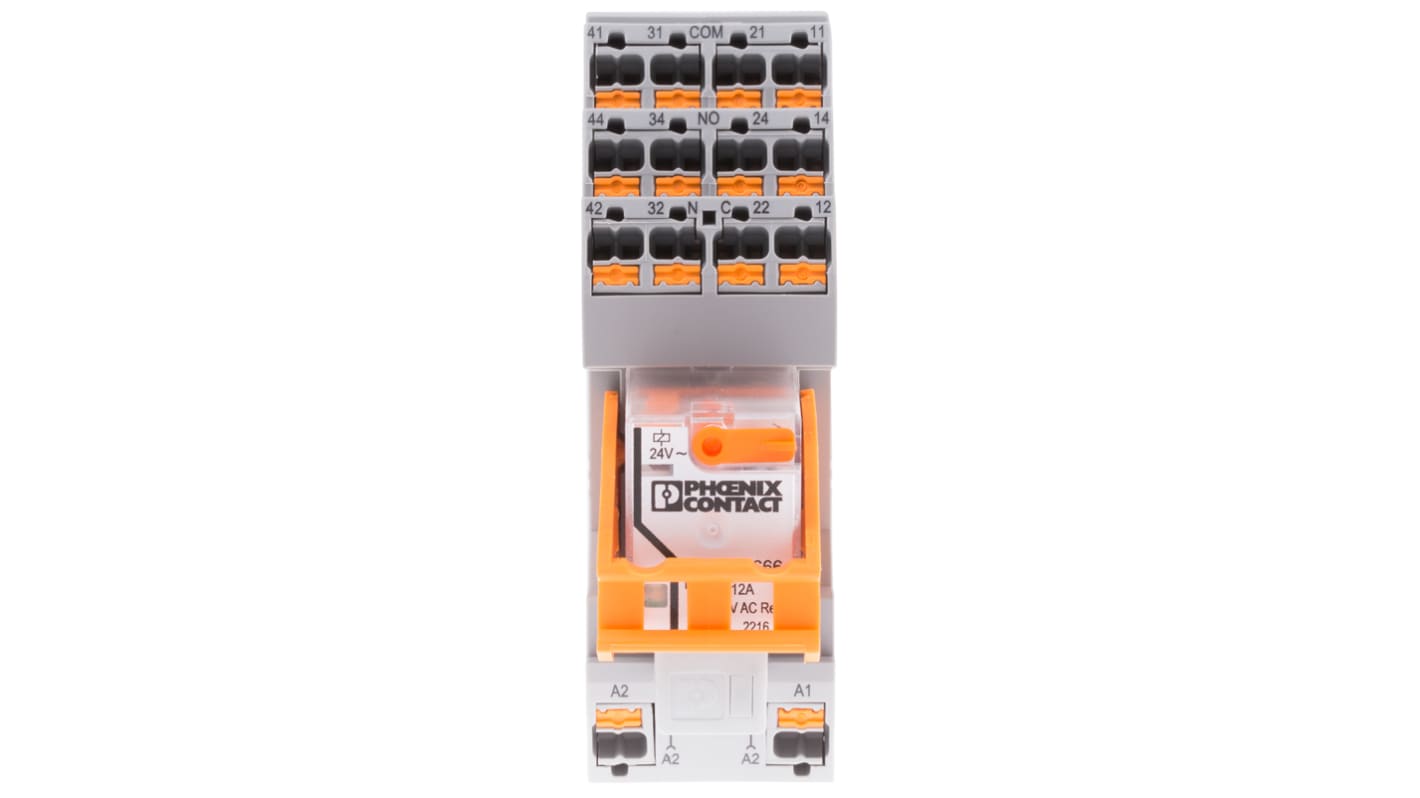
Phoenix Contact DIN Rail Power Relay, 24V ac Coil, 8.5A Switching Current, DPDT

Subtotal (1 unit)*

$24.00

(exc. GST)

$26.40

(inc. GST)

Add to Basket
Select or type quantity
In Stock
  • 6 unit(s) ready to ship from another location
Need more? Click ‘Check delivery dates’ to find extra stock and lead times.
Units
Per unit
1 +$24.00

*price indicative

RS Stock No.:
794-3692
Mfr. Part No.:
2903313
Brand:
Phoenix Contact
Find similar products by selecting one or more attributes.
Select all

Brand

Phoenix Contact

Coil Voltage

24V ac

Contact Configuration

DPDT

Mounting Type

DIN Rail

Switching Current

8.5A

Number of Poles

2

Series

RIF-2-RPT-LV-24AC/2X21

Latching

No

Terminal Type

Plug In

Maximum Switching Voltage AC

440V ac

Maximum Switching Voltage DC

250V dc

Length

43mm

Coil Resistance

158 Ω

Minimum Operating Temperature

-40°C

Contact Material

Silver Alloy

Maximum Operating Temperature

+60°C

Life

10000000 (Mechanical) cycles

Height

111mm

Depth

90mm

Maximum Switching Power DC

660 W

Maximum Switching Power AC

4 kVA

Application

Power

RIF2 Power Relay Module


Professional range of power relays that come with a base, suppressor and retaining bracket that benefits from a universal plug in design.

Features & Benefits


Easy wiring due to push in connection technology
Easy handling and extension of range
Plug in display/suppressor module
AC and DC versions
2 and 4 contact options
Yellow LED indicator
Varistor or damping diode protective circuit

What is a non-latching relay and how do they work?


A relay is an electrical switch that is operated by electrical pulses, their primary function is to open and close a circuit. When power passes through a circuit, a relay switches position (usually from NC to NO) using an internal coil which generates a magnetic force. This force then holds the relay in a NO position, when the current is switched off the relay returns to the NC position. This function is what makes these non-latching relays perfect for push-button applications such as keyboards and micro-controller input buttons.

A little more info


Non-latching relays support a range of signal characteristics, ranging from low voltage or current to high voltage or current and from DC to GHz frequencies.

What is the difference between a latching relay and a non-latching relay?


When a latching relay operates its contacts, the relay holds its position, even when the supply of its operating coil has been disconnected. When a non-latching relay operates its contacts, the relay will reset automatically once the supply of its coil is disconnected through the internal spring mechanism.

Related links