Lab Bottles
Lab bottles, also known as laboratory bottles, are fundamental to a wide range of applications in scientific, pharmaceutical, and industrial laboratories. These bottles support processes such as sample collection, reagent storage, media preparation, chemical dispensing, and rinsing.
Available in various formats, including wide-mouth jars, graduated measuring bottles, and lab squeeze bottles, you can ensure safety, repeatability, and efficiency in your lab operations by matching the correct lab bottle to its intended use.
Are Glass Containers Better Than Plastic?
Choosing between glass and plastic lab bottles depends on the intended application, chemical compatibility, and handling environment.
Glass laboratory bottles, such as borosilicate reagent bottles, offer excellent chemical resistance, thermal stability, and low gas permeability. They are ideal for storing volatile solvents, corrosive reagents, or samples requiring autoclaving. Their transparent bodies also enable clear visual inspection.
On the other hand, plastic wash bottles, such as those made from LDPE, HDPE, or PP, are lightweight, shatter-resistant, and more economical. They are often used in applications requiring flexibility and repeated handling such as in lab squeeze bottles or plastic wash bottles for rinsing glassware.
Benefits of Plastic Lab Bottles:
- Ideal for hazardous workspaces due to impact resistance
- Lower weight reduces handling strain in high-use settings
- Superior for non-critical or short-term storage
Benefits of Glass Lab Bottles:
- Inert and non-leaching, suitable for sensitive reagents
- Autoclavable at high temperatures
- Long-lasting under correct storage conditions
- In practice, labs often use both glass and plastic options across various functions.
Application Of Lab Bottles
Lab bottles are integral to countless procedures in scientific, medical, industrial, and academic laboratories. Their specific uses span:
- Reagent Storage: Reagent bottles are used to safely store chemicals and solutions. Amber-tinted versions help protect light-sensitive compounds.
- Sample Collection: Lab sample bottles are commonly used for collecting environmental samples (e.g., water, soil) or biological specimens. Leak-proof closures are critical here.
- Media Preparation: For microbiological or cell culture media, volumetric lab storage bottles are essential to prepare, store, and dispense growth media.
- Chemical Dispensing: Lab dispensing bottles and lab squeeze bottles allow controlled dispensing of liquids in titration, buffer preparation, and cleaning processes.
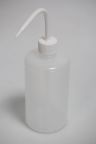
- Glassware Washing: The laboratory wash bottle delivers a precise jet stream for rinsing glassware with solvents or deionised water.
- Sterilisation and Autoclaving: Select laboratory bottles are designed to withstand repeated autoclaving for sterility in aseptic workflows.
What Types of Lab Bottles Are Available?
Lab bottles commonly include:
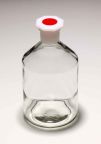
- Reagent Bottles: Available in glass or plastic, with wide or narrow necks. Commonly used to store acids, bases, and solvents.
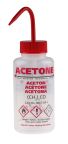
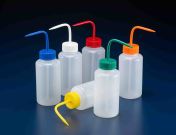
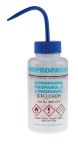
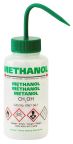
- Lab Wash Bottles: Designed for directed rinsing, typically made from LDPE with angled nozzles.
- Lab Squeeze Bottles: Flexible containers that dispense liquids via manual pressure, useful in rinsing or adding drops during experiments.
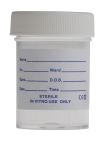
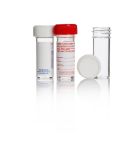
- Lab Sample Bottles: Leak-proof, sterile or non-sterile containers suitable for field sampling or lab analysis.
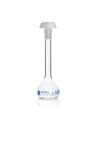
- Graduated Lab Bottles: Printed or moulded volume markings for liquid measurement.
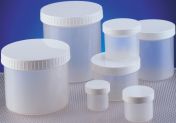
- Lab Storage Bottles: General-purpose bottles in varying sizes and shapes, ideal for storing buffers, salts, or biological solutions.
- Lab Dispensing Bottles: Equipped with pump or dropper caps for controlled fluid transfer.
How to Choose the Right Lab Bottles?
Selecting the most suitable lab bottles for an operation requires aligning bottle features with the laboratory’s specific functional and environmental requirements. Key selection criteria include material compatibility, application type, volume and size requirements, closure types and more.
Material Compatibility
Chemical resistance is critical. For aggressive or reactive chemicals (e.g., nitric acid, acetone, or chloroform), use borosilicate glass or fluoropolymer-coated containers. For general acids, alkalis, or aqueous solutions, HDPE, LDPE, or PP bottles are usually sufficient. Refer to chemical compatibility charts for optimal material selection.
Application Type
The intended use often determines bottle design:
- For rinsing, opt for a lab wash bottle with directional nozzles.
- For storage, choose lab storage bottles with leak-proof closures.
- For sample collection, select lab sample bottles with tamper-evident caps or sterile packaging.
- For dispensing, use a lab dispensing bottle with an appropriate pump or nozzle type.
Volume and Size Requirements
Consider both the working volume and necessary headspace. Bottles typically range from 30 mL to 5 L or more, depending on lab scale.
Closure Type and Seal Integrity
The bottle cap or closure must provide a secure seal, especially when dealing with volatile or hazardous substances. Options include:
- Screw caps (with or without liners)
- Dropper tips or snap-on lids for small-volume dispensing
- Pump tops for controlled flow
- Venting caps for gases or pressure build-up scenarios
Environmental and Regulatory Conditions
- Autoclavability: Required for sterility workflows, especially in microbiology, cell culture, or GMP-compliant labs.
- UV Resistance: Amber or opaque lab bottles protect against light degradation in photolabile compounds.
- Cleanroom Suitability: For cleanroom or ISO-classified environments, opt for pre-sterilised or low-particulate bottles with certification.
The Leading Supplier and Distributor of Lab Bottles in Australia
RS Australia is a trusted supplier of lab equipment such as magnifying glasses and lab bottles, as well as test and measurement equipment like pH meters, dial thermometers and light meters. Our product portfolio includes high-quality laboratory bottles, jars, and containers from globally recognised brands such as RS PRO and SAM, and general laboratory equipment from Eschenbach, Vikanand Coil.
From lab wash bottles for precise rinsing to chemical-resistant reagent bottles and durable plastic wash bottles, we offer solutions to suit every lab environment. Whether you're managing a commercial research facility or setting up a cleanroom-grade production site, RS helps ensure compliance, safety, and operational efficiency.
For information on delivery timelines, service coverage, or purchasing support, please visit our delivery page.
171 Products showing for Lab Bottles
 In Stock
Subtotal (1 box of 5 units) $61.44(exc. GST) $61.44/box |
 In Stock
Subtotal (1 unit) $88.18(exc. GST) $88.18/unit |
 In Stock
Subtotal (1 unit) $48.57(exc. GST) $48.57/unit |
 In Stock
Subtotal (1 box of 10 units) $87.82(exc. GST) $8.782/unit |
 In Stock
Subtotal (1 pack of 5 units) $111.79(exc. GST) $111.79/pack |
 In Stock
Subtotal (1 pack of 5 units) $132.66(exc. GST) $26.532/unit |
 In Stock
Subtotal (1 pack of 5 units) $105.51(exc. GST) $105.51/pack |
 Temporarily out of stock
Subtotal (1 pack of 5 units) $202.42(exc. GST) $40.484/unit |
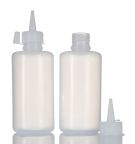 In Stock
Subtotal (1 pack of 10 units) $102.70(exc. GST) $10.27/unit |
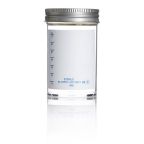 Temporarily out of stock
Subtotal (1 box of 200 units) $530.60(exc. GST) $530.60/box |
 Temporarily out of stock
Subtotal (1 pack of 10 units) $227.27(exc. GST) $22.727/unit |
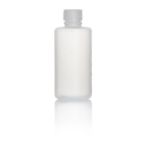 In Stock
Subtotal (1 pack of 10 units) $82.43(exc. GST) $8.243/unit |
 In Stock
Subtotal (1 pack of 10 units) $26.83(exc. GST) $2.683/unit |
 Temporarily out of stock
Subtotal (1 pack of 5 units) $197.66(exc. GST) $39.532/unit |
 Temporarily out of stock
Subtotal (1 box of 700 units) $392.49(exc. GST) $392.49/box |
 Stocked by manufacturer
Subtotal (1 pack of 5 units) $180.93(exc. GST) $36.186/unit |
 Temporarily out of stock
Subtotal (1 pack of 5 units) $255.51(exc. GST) $51.102/unit |
 Temporarily out of stock
Subtotal (1 pack of 10 units) $271.73(exc. GST) $27.173/unit |
 In Stock
Subtotal (1 box of 24 units) $485.21(exc. GST) $485.21/box |
 Temporarily out of stock
Subtotal (1 pack of 5 units) $92.51(exc. GST) $92.51/pack |

Popular Searches
Related links
- RS PRO Squeeze Bottle, 225ml
- RS PRO Squeeze Bottle, 110ml
- RS PRO Squeeze Bottle, 60ml
- RS PRO 7ml Polypropylene Wide Neck Storage Bottle
- RS PRO 90ml Polypropylene Wide Neck Storage Bottle
- RS PRO 1L High Density Polyethylene Wide Neck Storage Bottle
- RS PRO 250ml High Density Polyethylene Wide Neck Storage Bottle
- RS PRO 250ml Polyethylene Narrow Neck Reagent Bottle
Be the first to know about our latest products and offers
Email address
The personal information you provide to us when signing up to this mailing list will be processed in line with the Privacy Policy