Barrier Strips
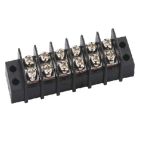
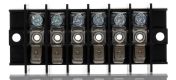
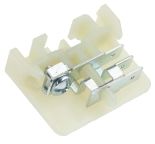
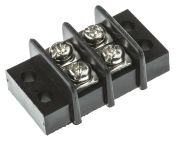
Barrier strips, also known as barrier terminal blocks, are screw-type electrical connectors that facilitate the connection of multiple circuits.
Wires are secured to a metal strip by tightening a screw. The design features multiple screw terminals arranged in a row, with each metal strip separated by an insulating block.
This insulating barrier prevents adjacent circuits from touching, ensuring safety and an organised connection.
How Do Barrier Strips Work?
A barrier strip terminal block works by providing a secure and insulated connection point for wires. Each barrier strip typically features a pair of screws arranged to connect to a separate conductor at either end of the strip. When the wires are connected, electrical current runs through the metal conductor between the screws.
Alternatively, some terminal strips have multiple screws along two parallel metal strips, creating a bus bar for efficient power distribution. This allows power to be easily distributed to several points from a single source.
A barrier terminal block connector can accommodate a wide range of wire sizes, providing a versatile and reliable connection for various electrical projects.
Types of Barrier Strips
By Physical Structure
- Dual-Barrier: These feature an insulating wall between each terminal and an additional wall on the outside, offering enhanced safety and protection.
- Tri-Barrier: With three insulating walls, this type offers superior circuit separation and protection from accidental contact in high-density installations.
- Single Row: A single row of terminals provides a compact solution for connecting multiple wires, ideal for space-constrained applications.
- Double Row: Featuring two parallel rows of terminals, this type allows for higher connection density, making it suitable for more complex wiring.
- Pluggable: These have a detachable plug, allowing for quick disconnection and re-connection of wires without removing each individual screw.
- Feed-through: This type of terminal barrier enables a continuous connection, allowing wires to pass through the block, often used in bus bar applications.
- Bi-level: Bi-level designs stack two rows of terminals, doubling the connection capacity while maintaining a small footprint.
By Termination Style
- Screw Terminals: The most common style, barrier screw terminal blocks feature a screw that is tightened to clamp a wire against the metal conductor, providing a secure and reliable connection.
- Spring Clamp Terminals: Using a spring-loaded mechanism to hold the wire in place, these barrier strip connectors offer a quick and tool-free termination method.
- Push-In Terminals: A modern design where the wire is simply pushed into the terminal, and an internal clamping unit holds it securely.
By Mounting Option
- PCB Mount: These terminal barriers are designed for direct soldering onto a printed circuit board (PCB), providing a permanent and secure connection for electronic circuits.
- Panel Mount: These are designed to be mounted on a panel or enclosure, providing an easy-to-access interface for external wiring.
- DIN Rail Mount: These mount directly onto a DIN rail, offering a modular and organised solution for industrial control cabinets.
How to Install Barrier Strips
Installing a terminal barrier strip requires a few straightforward steps to ensure secure and organised wiring:
- Choose the correct strip: Select a barrier strip terminal block that is rated for your wire size, voltage, and current of your application.
- Mount the strip: Securely attach the strip to the desired surface, such as a PCB or panel, using appropriate screws or fasteners.
- Prepare the wires: Carefully strip the insulation from the wire ends to the correct length, ensuring a clean and secure connection without exposed conductors.
- Insert and tighten wires: Loosen the terminal screws, insert the prepared wire ends, then tighten the screws to clamp them firmly in place.
- Verify connections: Always double-check every wire joint to ensure it is secure and properly insulated before applying power to the circuit.
Applications of Barrier Strips
Barrier strips are essential components in various industries and sectors where secure, multi-point wire connections are required.
Industrial Control Panels
Terminal barrier strips are used for the organised wiring of control components. They simplify installation and troubleshooting by providing clear and isolated connection points for each circuit within a panel.
HVAC Systems
Electrical barrier strips connect wiring for thermostats, sensors, and control units. This ensures reliable and safe electrical connections in these crucial heating and cooling systems.
Lighting Systems
In commercial and residential lighting, barrier terminal blocks connect multiple fixtures to a power source. Their compartmentalised design ensures secure and isolated connections for each light.
Power Distribution Units
A terminal barrier strip is vital in power distribution units for safely distributing power to multiple devices. They offer a secure and insulated junction for high-current connections.
Machinery Wiring
Industrial machinery relies on barrier screw terminal blocks to provide robust and vibration-resistant connections for motors, sensors, and control circuits.
Automotive Electrical Systems
Barrier strips are used for organised wiring connections in vehicles. They are particularly useful for custom wiring harnesses and aftermarket electronic installations.
How to Choose the Right Barrier Strips
When selecting an electrical barrier strip, consider the following factors to ensure it is suitable for your intended application:
- Wire size and gauge: The barrier strip must accommodate the wire size you're using for a secure and reliable connection.
- Current and voltage ratings: These ratings must be compatible with your circuit's electrical requirements to ensure safety and prevent component failure.
- Number of terminals: Choose a strip with the correct number of terminals to match the number of circuits you need to connect as well as accommodate anticipated future expansions.
- Mounting method: Select a mounting method, such as PCB, panel, or DIN rail, that is suitable for your installation environment.
Buy Barrier Strips from RS Australia
RS Australia is a trusted supplier and distributor of barrier strips, offering a comprehensive selection of these essential connection devices. Our products are sourced from leading brands like Sato Parts, Toyogiken, TE Connectivity, and Yoshida Electric Industry, ensuring high-quality options for every application.
Beyond barrier type terminal blocks, RS Australia also has a wide array of other connector components and accessories, including pluggable terminal blocks, DIN rail mounted terminals, and DIN rail brackets, to meet all your electrical connection needs.
Explore the full range of products on our user-friendly online site and have your items shipped directly to your door. With our flexible delivery options, we ensure that you receive your products at your convenience.
Find out more about our delivery times and fees on our delivery information page.


Popular Searches
Related links
- TE Connectivity Dual Barrier Strip 9.53 mm Pitch 300 V, 20A
- TE Connectivity Dual Barrier Strip 9.53 mm Pitch 300 V, 20A
- TE Connectivity Dual Barrier Strip 8.26 mm Pitch 150/300V, 20A
- Molex Barrier Strip 0.375 mm Pitch, 1 Row
- Osada Barrier Strip 16 mm Pitch 600 V, 100A
- TE Connectivity Barrier Strip 6.35 mm Pitch 300 V, 10A
- RS PRO Barrier Strip 1 Row 20A
- RS PRO Barrier Strip 9.5 mm Pitch, 1 Row