- Published 19 Feb 2025
- Last Modified 19 Feb 2025
- 8 min
A Comprehensive Guide to Hammers
Learn what a hammer is used for, different types of hammers, their purpose and functions, and the materials they're made from, in our comprehensive guide.


Our guide explores the purpose, different types, materials, and selection process of hammers to help you choose the right one for your application.
Hammers, along with spanners, are among the most essential tools in any toolbox, and are used for everything from driving nails to demolition work. But with so many different types of hammers available, choosing the right one for the job can feel overwhelming.
In this guide, we'll discuss what the various types of hammers are used for and the key features to consider when selecting the perfect hammer for your needs.
Whether you're equipping your team for a demanding job site or tackling a DIY project at home, understanding the nuances of hammers will help you choose the right tool for the job from the wide selection available at RS.
Purpose of a Hammer
A hammer's ability to deliver a concentrated impact force makes it incredibly versatile, capable of performing different functions that range from delicate assembly to powerful demolition:
- Driving nails: This is perhaps the most common use of a hammer, typically employing a claw hammer to drive nails into wood or other materials for construction and carpentry.
- Shaping metal: Ball pein hammers, with their rounded head, are ideal for shaping metal, rounding edges, and striking punches and chisels.
- Breaking and demolition: Sledgehammers, with their heavy head and long handles, provide the force needed for demolition tasks, breaking concrete or driving stakes into the ground.
- Cabinetry and joinery: Mallets, with their softer heads made of rubber or wood, are used to assemble furniture or gently tap components into place without damaging the material.
Types of Hammers

Claw Hammer
The most common type of hammer, easily recognised by its curved claw used for removing nails. Versatile and essential for general carpentry and DIY projects.
- Purpose/use of hammer: Driving nails, removing nails, prying boards, and general light construction or repair tasks.
- Materials: Steel head, wood or fibreglass handle.
- Weight: 450g is a common weight for general use.

Sledgehammer
A large and heavy hammer with a long handle designed to deliver powerful blows for demolition and heavy-duty tasks.
- Purpose/use of hammer: Demolition, breaking concrete, driving stakes.
- Materials: Forged steel head, hickory or fibreglass handle.
- Weight: Can range from 1.8kg to 9kg or more.

Ball Pein Hammer
Also known as a machinist's hammer, it has a flat face and a rounded pein (ball-shaped head) used for tasks like peening and metal fabrication.
- Purpose/use of hammer: Shaping metal, striking chisels and punches, metal fabrication, riveting.
- Materials: Forged steel head, hickory or fibreglass handle.
- Weight: Typically ranges from 110g to 900g.

Mallet
It features a soft head made of rubber, wood, or plastic, and it is used for striking surfaces without causing damage.
- Purpose/use of hammer: Cabinetry, joinery, assembling furniture, woodworking, delicate assembly tasks.
- Materials: Rubber, wood, plastic, or rawhide head; wood or fibreglass handle.
- Weight: Varies depending on the size and material.

Dead Blow Hammer
Filled with shot (small metal balls) to minimise rebound and deliver maximum impact.
- Purpose/use of hammer: Automotive work, metalworking, driving punches and chisels.
- Materials: Steel or alloy core with a polyurethane or rubber shell, filled with shot to reduce rebound.
- Weight: Varies depending on the size.

Framing Hammer
Similar to a claw hammer but with a straighter claw and a heavier head used for driving large nails into framing lumber. Often features a milled face for better grip on nails.
- Purpose/use of hammer: Framing, construction, heavy-duty nailing.
- Materials: Steel head, fibreglass or wood handle.
- Weight: Typically 560g to 790g.

Brick Hammer
Also known as a mason's hammer, it has a flat face and a chisel-like blade for shaping and breaking bricks and concrete.
- Purpose/use of hammer: Masonry work, bricklaying, concrete work.
- Materials: Forged steel head, wood or fibreglass handle.
- Weight: Varies depending on the size.

Cross Pein Hammer
Has a pein (the back part of the hammerhead) that is perpendicular to the handle, used for shaping metal and starting rivets.
- Purpose/use of hammer: Metalworking, blacksmithing, riveting.
- Materials: Forged steel head, hickory or fibreglass handle.
- Weight: Varies depending on the size.

Tack Hammer
A small, lightweight hammer with a magnetic head for driving tacks and small nails.
- Purpose/use of hammer: Upholstery, picture framing, crafts.
- Materials: Steel head, wood or plastic handle.
- Weight: Typically 200g to 400g.

Rubber Hammer
Features a rubber head to deliver impact without damaging surfaces.
- Purpose/use of hammer: Assembly work, automotive repairs, tile setting.
- Materials: Rubber head, wood or fibreglass handle.
- Weight: Varies depending on the size.

Club Hammer
A short-handled sledgehammer with a double-faced head.
- Purpose/use of hammer: Demolition, driving stakes, breaking rocks, chiselling.
- Materials: Forged steel head, hickory or fibreglass handle.
- Weight: Typically 1.8kg to 2.7kg.

Stone Hammer
Also known as a rock hammer, it has a pointed or chisel-like head used for shaping and splitting stone.
- Purpose/use of hammer: Geological sample collection, stone masonry, landscaping.
- Materials: Forged steel head, wood or fibreglass handle.
- Weight: Varies depending on the size.

Bumping Hammer
A specialised hammer used in automotive bodywork to shape and smooth sheet metal. It often has a rounded or domed face and may be available in various sizes and shapes to create different contours.
- Purpose/use of hammer: Shaping sheet metal, removing dents, bodywork repairs.
- Materials: Steel head, wood or fibreglass handle.
- Weight: Varies depending on the size and intended use (typically between 300g and 1kg).
Parts of a Hammer
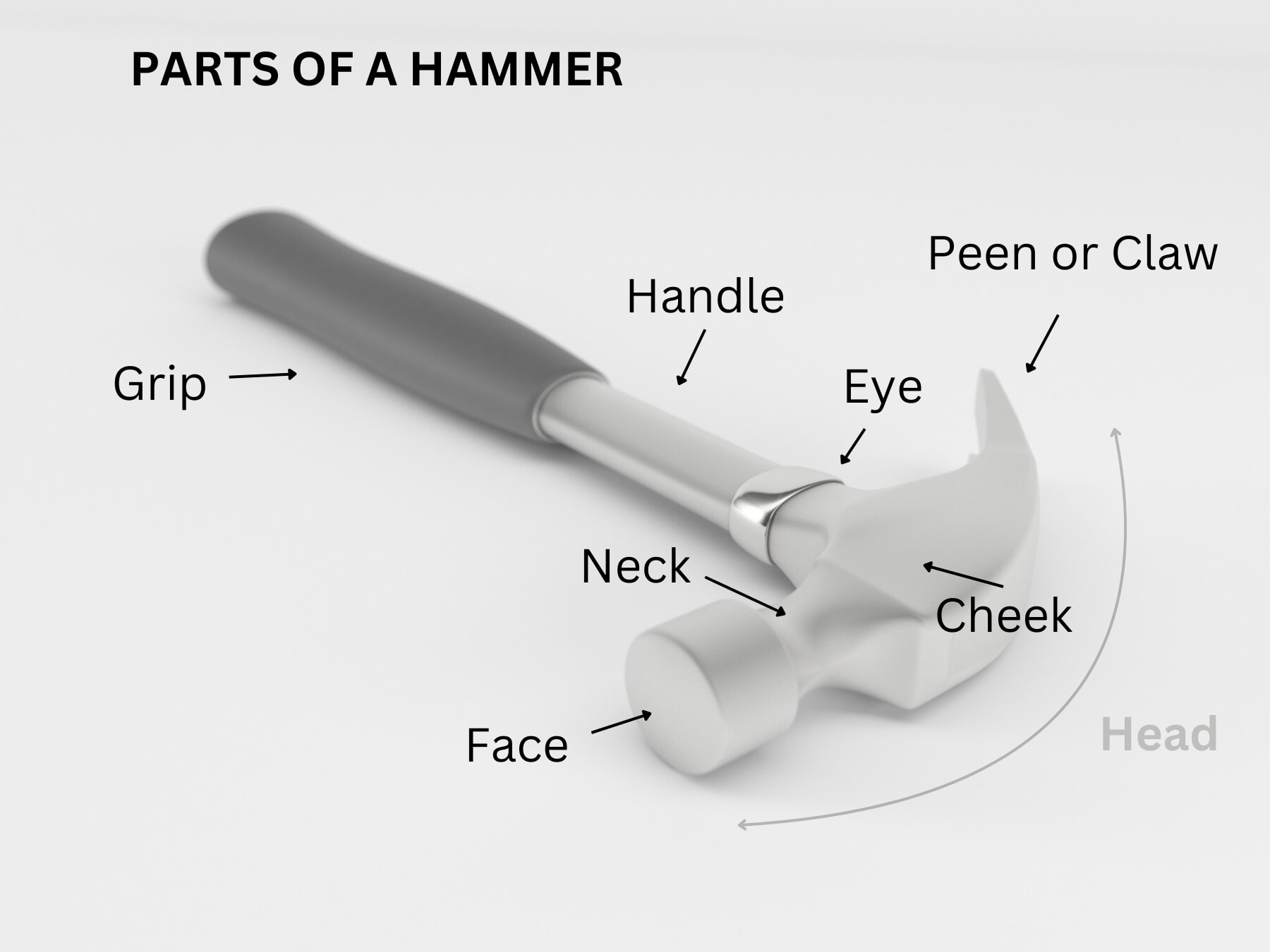
Hammerhead
The purpose of the hammerhead is to deliver the impact. It's typically made of hardened steel or other durable materials.
The weight and shape of the hammerhead determine its suitability for different tasks. Heavier hammer heads deliver more force, while specialised shapes like ball pein or claws serve specific purposes.
Face
The face is the striking surface of the hammerhead. It's usually flat and smooth for driving nails or striking chisels, but it can also be textured or shaped for specific applications.
A smooth, undamaged face ensures clean contact, while a larger face provides a greater striking area.
Pein/Claw
The pein is the back part of the hammer, opposite the face. It can be ball-shaped (ball pein hammer), wedge-shaped (cross pein hammer), or curved into a claw (claw hammer).
The shape of the pein determines its function. Ball peins are used for shaping metal, cross peins for starting rivets, and claws for removing nails.
Neck
The neck is the narrow section connecting the hammerhead to the handle.
The neck's strength and durability are crucial for preventing breakage. Look for hammers with well-forged necks and smooth transitions to minimise stress concentration.
Eye
The eye is the hole in the hammerhead where the handle is inserted. It's typically oval or round and securely wedges the handle in place.
Cheek
The cheeks are the sides of the hammerhead, extending from the face to the pein or claw. The shape and width of the cheeks can affect the balance and control of the hammer.
Handle
The handle is the part of the hammer that provides leverage and grip for swinging the hammer. It's typically made of wood, fibreglass, or steel, each offering different characteristics in terms of weight, durability, and vibration absorption.
The length and material of the handle influence the hammer's swing and comfort. Longer handles provide more leverage for powerful strikes, while shorter handles offer greater control for precision work.
Grip
The grip is the textured or contoured surface on the handle that provides a secure and comfortable hold.
A comfortable grip is essential for preventing fatigue and maintaining control when the hammer is in use. Look for grips that are ergonomically designed and provide good traction, even when wet or oily.
Materials of a Hammer
The choice of materials for a hammer significantly influences its performance, durability, and suitability for different types of tasks. The head is typically made from a strong, impact-resistant material to withstand repeated strikes, while the handle is often made from a material that offers a good balance of strength, shock absorption, and comfort.
Hammer Head Materials
Steel: Steel offers a good balance of strength, durability, and impact resistance. However, steel hammers can damage delicate surfaces or create sparks, making them unsuitable for certain applications.
Brass/Copper: These softer metals are often used for tasks where steel could cause damage or create sparks. However, brass and copper hammers are not as durable as steel and may deform with heavy use.
Lead/Dead Blow: Lead or dead blow hammers have heads filled with shot (small metal balls) to minimise rebound and deliver maximum impact without damaging the striking surface. This function makes them ideal for tasks like automotive bodywork.
Rubber/Plastic: Hammers with rubber or plastic heads are designed for tasks where a softer impact is required. They are commonly used in assembly work, tile setting, and automotive repairs to avoid damaging delicate parts or surfaces.
Hammer Handle Materials
- Wood: Wood is a traditional and popular choice for different types of hammer handles, offering a good balance of strength, flexibility, and shock absorption. However, wood handles can be susceptible to damage from moisture, temperature changes, and heavy impacts.
- Fibreglass: Fibreglass handles are known for their durability, strength, and resistance to weather and chemicals. They are also lightweight and offer good vibration dampening. However, fibreglass handles can be more expensive than wood.
- Steel: Steel handles are incredibly strong and durable, making them ideal for heavy-duty applications and demanding work environments. They are resistant to impact, moisture, and chemicals, ensuring long-lasting performance. However, steel handles are heavier than wood or fibreglass and can transmit more vibrations to the user.
- Composite Materials: Some hammer handles are made from composite materials that combine the benefits of different materials. These handles can offer a unique blend of strength, durability, shock absorption, and lightweight properties.
Hammer Weight & Balance
Choosing a hammer with the correct weight and balance is important for efficient and comfortable use. A hammer that's too heavy can be tiring and difficult to control, while one that's too light may not deliver enough force for its purpose.
The average weight of a hammer can vary significantly depending on its type and intended use. However, a general guideline for common hammer weights is:
- Light Hammers (200-400g): These hammers are ideal for lighter functions such as driving small nails, tapping in pins, or assembling delicate components. They offer good control and precision for finer work. Examples include tack hammers, pin hammers, and some ball pein hammers.
- Medium Hammers (500g-1kg): This weight range is suitable for a wide variety of general-purpose tasks, including driving larger nails, light demolition, and some metalworking. Claw hammers, framing hammers, and smaller sledgehammers often fall within this range.
- Heavy Hammers (2kg+): These hammers are designed for heavy-duty tasks that require significant force, such as demolition, breaking concrete, and driving large stakes. Sledgehammers and larger framing hammers are examples of heavy hammers.
The balance of a hammer is also important for comfortable and effective use. A well-balanced hammer feels natural in the hand and allows for controlled swings without excessive strain.
Featured Articles

Ultimate Guide to USB Cables by StarTech.com
This complete USB cable guide explains all about USB ports, connector types, USB versions and speeds, helping you find the right connection for your device.

Tap Washers Buying Guide - Types, Uses and Applications
A tap washer buying guide that explains everything you need to know about the types and sizes available, where to use them and which is best for your task.

Ethernet Cable Guide
Use our helpful guide to learn about ethernet cables. Find the best ethernet cable for your needs and get the most from your internet.