Earthing Straps
Earthing straps, or grounding straps, connect an electrical system to the conductive surface of the earth for safety. They provide an outlet for excess current if there is a fault in the system, allowing the current to flow safely into the earth.
Earthing straps are also commonly used as antistatic devices. This allows the safe operation of sensitive electrical equipment, by preventing the build-up of static, which can cause sparks to fly and damage equipment. While earthing and bonding straps both divert fault currents away from people, bonding straps connect metal parts together to equalise potential and prevent static shocks.
How Earthing Straps Work
Earthing straps, also known as grounding straps, work by providing a path for static electricity to safely discharge to the ground, preventing damage to sensitive electronic components and potential harm to individuals. Made of conductive materials, earthing straps allow electrons to flow freely when worn by an individual and connected to a ground point, such as a grounding plug or conductive mat. By connecting to a ground point, the strap protects the individual and equipment from any static charge by quickly diverting it away to the earth.
How Do Earthing Straps Ensure Safety?
In the event of a fault, earthing straps provide protection by drawing current away from the equipment or worker and into the ground. If the current gets too high, the circuit should also be protected by a device such as a thermal magnetic circuit breaker. Most industrial-grade earthing straps limit current flow and protect users from electric shock by incorporating a 1-megohm resistor. These earthing straps are essential when working with high-voltage equipment.
Types of Earthing Straps
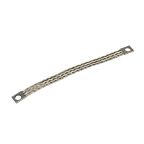
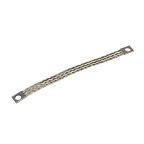
- Braided: Composed of interwoven wire strands, a braided earthing strap offers excellent flexibility and a large surface area for good conductivity.
- Mesh or grid: A mesh or grid earthing strap consists of interwoven or welded wires forming an open pattern, providing good surface contact and flexibility.
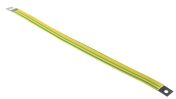
- Sheet or strip: A sheet or strip earthing strap is a flat, solid piece of conductive material, offering high current-carrying capacity for its thickness.
- Solid wire: A solid wire earthing strap is a single, whole conductor, providing a simple and rigid connection suitable for specific applications.
- Antistatic earthing straps: Designed to safely discharge static electricity from a person, these straps typically connect the wearer to a grounded point via wrists or ankles to prevent electrostatic discharge.
- Equipment earthing straps: These straps are used to connect electrical equipment to a common earthing point, ensuring safety by providing a low-resistance path for fault currents.
Earth Bonding Strap Materials
- Copper: Copper bonding straps offer excellent electrical conductivity and corrosion resistance, making them a highly effective choice for grounding applications.
- Aluminium: Aluminium bonding straps are lightweight and cost-effective, but possess lower conductivity and are more susceptible to oxidation than copper straps.
- Tinned copper: Tinned copper bonding straps feature a layer of tin over copper, enhancing their solderability and resistance to oxidation while retaining good conductivity.
- Stainless steel: Stainless steel bonding straps provide exceptional corrosion resistance and mechanical strength, making them suitable for harsh environments. They possess lower electrical conductivity compared to copper.
- Nickel-plated materials: Nickel-plated bonding straps offer improved corrosion and wear resistance, and a more durable surface, while maintaining good electrical conductivity.
- Silver-plated materials: Silver-plated bonding straps provide superior electrical conductivity and excellent corrosion resistance, making them ideal for high-performance or sensitive applications.
The Difference Between Bonding And Grounding Straps
Earthing or grounding straps are used to connect an electrical system or equipment to the general mass of the earth, thus providing a safe path for fault currents and preventing electric shock.
On the other hand, a bonding strap can be used to connect two pieces of metal from a machine permanently, equalising their electrical potential and eliminating electrical build-up. This prevents dangerous voltage differences between the two components during a fault or static build-up.
Industrial Applications of Earthing Straps
Earthing straps are used in diverse industrial applications primarily for safety, equipment protection, and maintaining system integrity.
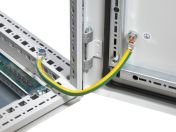
- Manufacturing and Machinery: Earthing straps are crucial for grounding various machinery components, electrical panel doors, and enclosures, preventing shock hazards and ensuring proper functioning in industrial automation and robotics.
- Power Generation and Distribution: Earthing straps provide a low-resistance path for fault currents in power plants, substations, and electrical distribution systems, protecting personnel and high-voltage equipment from surges and lightning strikes.
- Oil and Gas Industry: In hazardous environments, heavy duty earth straps are essential for dissipating static electricity from tanks, pipelines, and processing equipment, preventing sparks that could ignite flammable materials.
- Telecommunications and Data Centers: Earthing straps ground sensitive electronic equipment, server racks, and communication infrastructure, minimising electromagnetic interference (EMI) and electrostatic discharge (ESD) for reliable data transmission and continuous uptime.
- Transportation (Automotive, Rail, Marine): In vehicles, locomotives, and marine vessels, earthing straps connect the battery negative terminal to the chassis or engine block, providing a stable ground reference for the electrical system and preventing electrical interference. They are also used for bonding metal parts to ensure equipotentiality, especially in moving parts.
How to Choose the Right Earthing Strap
Choosing the right earthing strap involves careful consideration of the application's electrical requirements, environmental conditions, and mechanical stresses.
- Current Capacity and Conductivity: Select a strap with sufficient cross-sectional area and material conductivity (e.g., copper for high conductivity) to safely carry the maximum expected fault current. A heavy-duty braided copper strap is ideal for grounding a large industrial motor due to its high current demands and the need for flexibility to handle vibrations.
- Environmental Factors: Consider corrosion, temperature, and chemical exposure. Stainless steel straps are suited for harsh, corrosive outdoor or chemical plant environments, while tinned copper is preferred in high-humidity areas for improved oxidation resistance.
- Flexibility and Mechanical Stress: For applications involving movement, vibration, or tight spaces, a flexible braided strap is superior to a rigid solid wire. Braided copper straps are commonly used to connect engine blocks to the chassis in automotive applications, thanks to its ability to withstand constant engine vibrations.
- Galvanic Compatibility: Avoid using dissimilar metals in direct contact without proper isolation, as this can lead to galvanic corrosion. If you need to connect an aluminum enclosure to a copper grounding system, use a bimetallic connector or ensure the strap material is compatible to prevent degradation.
- Installation and Termination: Ensure the strap's length and terminal type (e.g., ring terminals, lugs) are compatible with the connection points and installation method. For instance, a bonding strap for a server rack might require pre-terminated lugs that easily attach to common rack grounding points.
Australia's Premier Distributor and Supplier of Earthing Straps
RS Australia is your source for high-quality earthing straps, grounding straps and electrical bonding straps. We are the distributor and supplier of products from industry leaders like RS PRO, Rittal and Schneider Electric. We also carry grounding and relay peripherals such as ESD earth plugs and earth leakage relays. For more details on our delivery services, visit our delivery page.
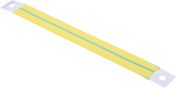
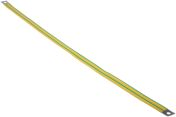

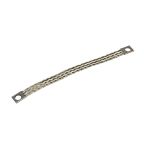

Related links
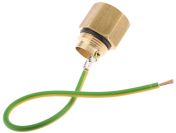
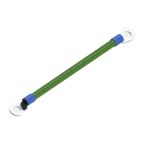
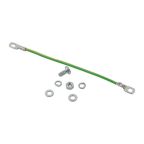
- Rittal Earthing Strap Copper 10mm Diameter
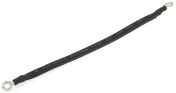
- RS PRO Earthing Strap Copper 75 x 13mm Diameter
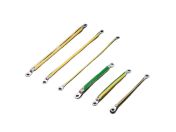
- Schneider Electric Earthing Strap Copper 2 → 8mm Diameter, 6 → 16mm² Wire Range
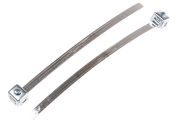
- Schneider Electric Earthing Strap Copper 2 → 5mm Diameter, 6 → 16mm² Wire Range
- RS PRO Earthing Strap Copper 300 x 13mm Diameter
- Rittal Earthing Strap, 16mm² Wire Range
- RS PRO Earthing Strap Copper 150 x 13mm Diameter
- RS PRO Earthing Strap Copper 457 x 13mm Diameter