Strain Gauges
A strain gauge is a sensor that measures strain, which is the deformation or displacement of a material in response to an applied force. It operates by converting mechanical stress, pressure, tension, or weight experienced by an object into a change in its electrical resistance. This change in resistance, the output signal, directly correlates with the magnitude of the force or load applied.
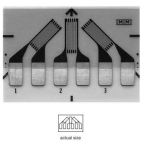
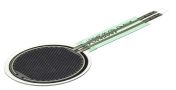
A common structure for a strain gauge sensor involves a metallic bonded foil pattern on a flexible, insulating substrate. As the object deforms, so does the foil, and this deformation causes its electrical resistance to change – a characteristic sensitivity known as the 'gauge factor'.
How do Strain Gauges work?
Strain Gauges measure the strain or force of an item by uniquely converting either force, pressure, tension and weight into a change in electrical resistance which then can be measured.
To achieve this, the strain gauge is securely mounted (typically bonded) to the surface of the material or object that is experiencing the strain. As the material stretches or compresses under load, the strain gauge deforms along with it; the gauge stretches or compresses with the surface. This physical deformation of the gauge's conductor (e.g., the foil pattern) alters its length and cross-sectional area, thereby changing its electrical resistance.
The change in resistance is extremely subtle, which is why Wheatstone bridge circuits are used to measure it with high precision. This circuit is sensitive to even the smallest resistance variations and converts them into a voltage output.
The resulting signal can then be interpreted by analog or digital instrumentation, such as data acquisition systems, to produce readable values of strain. These values are often used to calculate related physical quantities like stress or applied force.
There are many different varieties of strain gauges, the most popular are listed below:
- General Purpose Precision Strain Gauges
- Transducer Quality Strain Gauges
- Karma Strain Gauges
- Bonded Foil Strain Gauges
Each type is designed for different accuracy levels, materials, and environmental conditions, making strain gauges versatile tools for a wide range of applications—from experimental testing to industrial monitoring.
Strain Gauge Load Cells & Transducers
Load cells, also called load cell transducers, are vital components in most industrial strain gauge weighing systems on processes. Strain gauge load cells essentially measure weight in the form of directional force, typically via a combination of spring elements and strain gauges which converts the weight measurement into an electrical output.
Common types of load cells utilising strain gauge technology include:
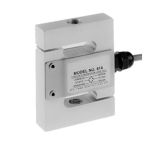
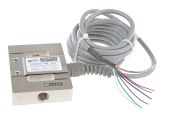
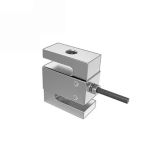
- S-Beam Load Cells: Shaped like an "S," these are versatile for tension and compression applications.
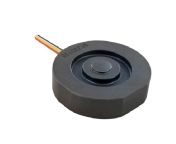
- Pancake Load Cells: Low-profile, high-capacity design, often used for tank and silo weighing.
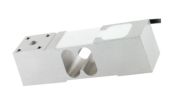
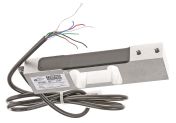
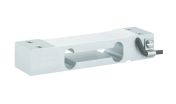
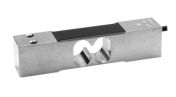
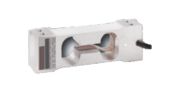
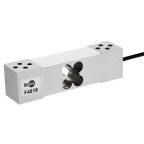
- Single-point Load Cells: Designed for off-center load applications, commonly found in platform scales.
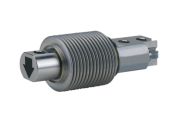
- Compression Load Cells: Specifically designed to measure compressive forces, often used in high-capacity weighing.
Strain Gauge Types
Different applications call for specific types of strain gauges, each with unique characteristics:
Bonded Foil Strain Gauges
This is the most common type of electronic strain gauge. It consists of a fine metallic foil grid (like constantan or karma alloy) bonded to a thin insulating backing (carrier). They are versatile, relatively inexpensive, and offer good accuracy and stability for a wide range of applications.
Transducer Quality Strain Gauges
These strain gauges are manufactured to higher precision and exhibit superior performance characteristics, such as lower creep, better linearity, and higher fatigue life. They are specifically designed for use in high-accuracy weighing scales, force transducers (like strain gauge transducers), and pressure sensors.
Karma Strain Gauges
Karma alloy strain gauges are known for their excellent temperature stability and high electrical resistivity. This makes them suitable for applications where temperature variations could otherwise affect measurement accuracy, or where higher resistance gauges are beneficial.
Semiconductor Strain Gauges
Also known as piezoresistive gauges, these use semiconductor materials that exhibit a much larger change in resistance for a given strain (higher gauge factor) compared to metallic foil gauges. This makes them very sensitive and suitable for measuring small strains or in applications requiring a high output signal, though they can be more sensitive to temperature changes.
Features and Benefits of Strain Gauge
Strain gauge sensors offer several advantages in various measurement scenarios:
- Versatile Application: Can be used on a wide array of products and materials, including keypads, medical devices, automotive components, and structural elements.
- Secure Mounting: Typically affixed to an object with specialized epoxy or glue, ensuring a reliable bond for accurate strain transmission.
- Long-Term Stability: Suitable for long-term installation and monitoring of structural health or ongoing processes when properly selected and installed.
- Ease of Installation: While requiring care, the installation process is well-established, and many gauges are designed for straightforward application. Some models are also waterproof or offer environmental protection.
- High Accuracy: Modern strain gauges can provide very precise and repeatable measurements.
Industrial Applications of Strain Gauges and Load Cells
Strain gauges and strain gauge load cells are fundamental in many industrial and research fields:
Automotive, Marine, and Aerospace Design
Used extensively for structural testing of vehicle chassis, ship hulls, and aircraft components, as well as for validating designs and monitoring stresses during operation.
Building and Architecture
Essential for structural health monitoring of bridges, buildings, and tunnels. Strain gauge load cells are also key components in weighbridges for vehicle weighing.
Industrial Engineering and Weighing
Form the core of most electronic weighing scales and systems, from precision laboratory balances to large industrial hopper scales. Used for process control, material testing, and quality assurance.
Torque Measurement
Critical for measuring torque in rotating machinery like motors, turbines, engines, fans, generators, wheels, and propellers, helping to optimize performance and detect faults.
Experimental Stress Analysis
Widely used in research and development to analyze the stress distribution in materials and structures under various load conditions, aiding in design optimisation and failure analysis.
Browse the broad range of Strain Gauges RS have to offer and order today for next day delivery.
How to Choose the Right Strain Gauge
Selecting the appropriate strain gauge is crucial for accurate measurements. Key considerations include:
- Type of Strain: Determine if you're measuring axial, bending, shear, or torsional strain.
- Material of Test Object: The gauge's carrier and adhesive must be compatible with the material.
- Strain Level: Choose a gauge with an appropriate operating range for the expected strains.
- Temperature Range: Consider the operating temperature and select a gauge with suitable temperature compensation or characteristics (e.g., Karma alloy).
- Accuracy and Stability Requirements: Higher precision applications demand higher quality gauges, like transducer-quality strain gauges.
- Gauge Length and Pattern: The size of the gauge and its grid pattern should suit the area being measured and the strain distribution.
- Environmental Conditions: Factors like humidity, chemical exposure, or waterproofing needs will influence gauge selection and protection methods.
- Fatigue Life: For applications involving cyclic loading, select a gauge designed for high fatigue resistance.
- Budget: The strain gauge price can vary significantly based on type and specifications.
Strain Gauge Manufacturer, Supplier & Distributor in Australia
RS Australia is your trusted supplier and distributor of quality strain gauges and strain gauge load cell sensors. Our broad selection includes reliable solutions from leading trusted brands such as Siemens, Tedea Huntleigh and WIKA, catering to a wide range of industrial, academic, and R&D applications. From force gauges to electrical buttons, our inventory offers outstanding value and dependable performance—ensuring accurate measurement and long-term durability for your testing or production needs.
Buy Strain Gauge Online from RS
Purchasing your strain gauge from RS Australia is simple and efficient. Browse our extensive online catalogue at competitive prices for sale, to find the right strain gauge, strain sensor, or digital strain gauge, along with other industry-standard tools like motor controllers and AC motors. Finalise your order using our secure payment methods, including credit cards and business accounts.
Our nationwide logistics network ensures fast doorstep delivery, typically within 1–3 business days across Australia. For more information about how to place an order, estimated delivery times, shipping fees, or available delivery services, please visit our Delivery Information page. Get accurate, high-performance strain gauges delivered straight to your location—buy online from RS Australia today.

Related links
- Strain Gauges and Load Cell Technology for Railway Maintenance
- A Complete Guide to Load Cells
- WIKA SPP-F1821 Series Button Strain Gauge, Compression Measure
- WIKA SPP-F1222 Series Button Strain Gauge, Compression Measure
- WIKA SPP-F1814 Series Button Strain Gauge, Compression Measure
- WIKA SPP-F1224 Series Button Strain Gauge, Compression Measure
- WIKA SPP-F1201 Series Button Strain Gauge Compression Measure
- WIKA SPP-F1201 Series Button Strain Gauge Compression Measure