Threaded Rods
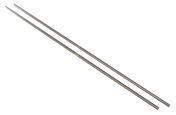
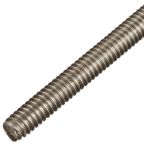
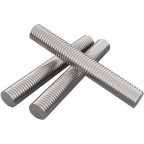
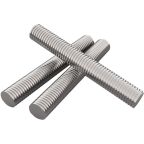
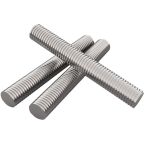
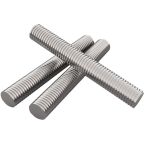
Threaded rods are long, straight metal fasteners with continuous screw threads running along their length, designed to join, support, or secure components in a wide range of applications. Often referred to as allthread or studs, they work by allowing nuts and washers to be tightened on either end, creating a strong clamping force between connected parts.
As a result, threaded rods are commonly used in construction, engineering, and industrial assemblies where reliable load-bearing support is required. Moreover, they are available in different materials, sizes, and strength grades, making them suitable for both indoor and outdoor use.
How Threaded Rods Work?
Threaded rods work by using their continuous helical threads to transform the way force and motion interact between components.
When a threaded rod or its accompanying nut is turned, the rotational motion is translated into linear movement along the rod’s axis due to the angled threads acting like a simple machine that converts torque into axial force.
This mechanical principle generates linear motion and creates a strong clamping or tension force that securely holds parts together. This makes threaded rods ideal for high-tension connections where components must remain fixed in place.
In structural or assembly applications, the ability to adjust and tighten nuts along the threaded length allows precise control of tension and positioning, seamlessly linking rotational action to reliable, linear fastening performance.
Features and Benefits of Threaded Rods
Threaded rods deliver reliable fastening solutions with versatile performance and durability for demanding applications.
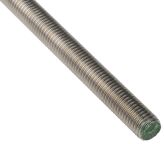
- Superior corrosion resistance: Stainless steel threaded rods form a protective oxide layer that dramatically slows down rust and degradation. This makes them ideal for environments exposed to moisture, salt water, or acid fumes, such as marine infrastructure, coastal projects, and chemical plants. This built-in resistance means they outperform many other materials without needing additional coatings.
- High strength and durability: Made from chromium-nickel alloys, these rods maintain excellent tensile strength while resisting wear and fatigue. This combination of strength and durability helps threaded rods stay secure under heavy loads and vibration.
- Long-term reliability: Because stainless steel resists pitting and crevice corrosion even in chloride-rich settings, these rods have longer service lives with lower maintenance needs. This means fewer replacements and reduced lifecycle costs.
- Versatile application: From structural anchoring to industrial assemblies, stainless steel threaded rods perform well across construction, marine, and chemical environments, offering dependable fastening in conditions where corrosion could otherwise compromise performance.
Applications of Threaded Rods
Threaded rods can be used in a wide range of industries, including:
- Automotive Industry: Threaded rods are used in vehicle manufacturing to secure body panels, engine components, and structural parts. They are also used during assembly to align and position components accurately, ensuring consistent fit, strength, and safety standards.
- Building Industry: Threaded rods are widely used in construction for structural anchoring, scaffolding systems, and wind turbine installations. In addition, they support heavy loads in concrete structures, suspended ceilings, and foundation frameworks.
- HVAC Industry: Threaded rods play a key role in HVAC installations by suspending ductwork, pipes, and strut channels from ceilings. As a result, they provide stable, adjustable support for air-conditioning and ventilation systems in commercial and industrial buildings.
- Electrical Industry: In electrical applications, threaded rods are commonly used to hang cable trays, conduit systems, and electrical panels. This ensures safe routing of wiring while maintaining proper spacing and load distribution.
- Food & Beverage Industry: Threaded screws or bars are used in breweries, wineries, dairy plants, and food processing facilities to support equipment, pipework, and production structures. Moreover, stainless steel rods are preferred to meet hygiene and corrosion-resistance requirements.
Types of Threaded Rods
Threaded rods come in different configurations to suit a wide range of fastening needs, with each type offering distinct advantages depending on how the threads are distributed along the rod.
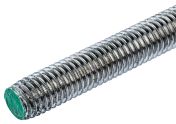
- Full Thread (Allthread): Allthread refers to a rod that is threaded along its entire length, enabling nuts and fasteners to be positioned anywhere on the bar. This design offers maximum flexibility for adjustment, making it ideal for general fastening, anchoring, and structural support applications.
- Partial Thread (Studs): Partial thread rods, commonly known as studs, are threaded only at the ends with a smooth center section. This configuration provides secure fastening while also improving alignment and load distribution in assemblies that require controlled clamping.
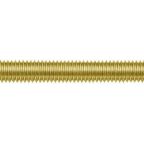
- Materials: Threaded rods are available in zinc-plated steel for basic corrosion protection, stainless steel 304/316 for superior resistance in marine or chemical environments, and brass for corrosion resistance, added electrical conductivity, and aesthetic appeal.
How to Choose the Right Threaded Rods?
Choosing the right threaded rod requires matching size, strength, and material properties to real-world demands.
- Diameter & Thread Pitch: Start by selecting the correct diameter and thread pitch for your project’s load and compatibility needs. Metric sizes (M6, M8, M10, etc.) are common worldwide, while imperial (UNC/UNF) threads are used in specific regional or legacy systems. Proper match with nuts and tapped holes prevents stripping or weak engagement.
- Length: Choose a rod long enough to span all components, washers, and nuts with extra threads for proper tightening. Standard stock lengths are often cut to size on-site for customized applications.
- Material & Finish: Consider the environment: zinc-plated or hot-dip galvanized rods resist rust outdoors, while stainless steel threaded bars (A2/A4) excel in corrosive or marine settings.
- Grade: Threaded rod grades like 4.8 and 8.8 define tensile and yield strength. Grade 4.8 is suitable for general use, while 8.8 offers higher load capacity; stainless grades (A2/A4) combine corrosion resistance with adequate strength for structural and industrial applications.
Threaded Rods Manufacturer, Supplier & Distributor in Australia
As a leading manufacturer, supplier, and distributor of threaded rods in Australia, RS provides a comprehensive range of high-quality fastening solutions to meet diverse industrial and construction needs. Our range includes RS PRO, nVent CADDY and DeWALT, leading names associated with durable, high-performance tools and accessories. We also carry other attachment accessories like machine screws, self-drilling screws or shoulder bolts so you can procure everything in one place.
Moreover, we provide speedy nationwide doorstep delivery across Australia. For more information related to delivery and charges, refer to our delivery page.

Popular Searches
Related links
- RS PRO Plain Stainless Steel Threaded Rod 1 m
- The Guide to Stainless Steel Rods and Bars
- RS PRO Zinc Plated Mild Steel Threaded Rod 65 mm
- RS PRO Zinc Plated Mild Steel Threaded Rod 120 mm
- RS PRO Plain Stainless Steel Threaded Bar 1 m
- Fasteners & Fixings
- nVent CADDY Galvanised Steel Threaded Rod 592600 2m
- RS PRO Plain Steel Threaded Rod 26 mm