Sprockets
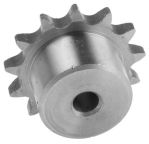
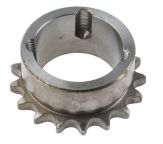
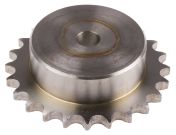
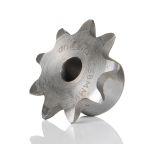
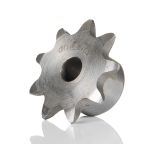
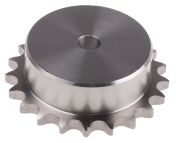
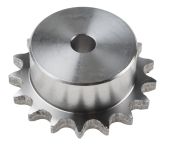
A sprocket, also referred to as a sprocket wheel or chain wheel, is a type of toothed wheel widely used for driving roller chains in industrial power transmission systems through rotation. The teeth of a sprocket engage with the links of a chain or belt, and they come in various sizes to fit different chain pitch sizes, making them versatile components in machinery and equipment. Sprockets intended for industrial use in Australia must meet ISO/ANSI compliance standards to ensure that every industrial chain sprocket provides the dimensional accuracy and tensile strength required for rigorous operations.
Read our sprockets guide for more in-depth information on sprockets and how to select the correct one for a chain.
Is a Sprocket the same as a Gear?
Sprockets differ from gears as they work independently and do not interlock. In power transmission applications such as gearboxes, drive chains and conveyer chains, sprockets transmit shaft rotation to chains and vice versa. When there is an even number of pitches in the chain, by using a sprocket with an odd number of teeth, this results in uniform wear over both the chain and sprocket teeth.
Industrial Sprocket Types and Configurations
The mechanical performance of an industrial sprocket is largely determined by its hub configuration, which dictates how the component is secured to the drive shaft and how it handles axial loads.
Type A (Plate Sprockets)
A Type A sprocket is a flat, hubless disc that is typically welded or bolted directly onto a flange or a hub. Because they are flush-mounted and lack a protruding extension, these are often utilised in space-constrained Australian machinery where the sprocket wheel must sit close to the bearing or machine housing.
Type B (Single Hub)
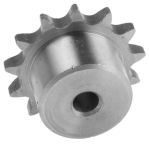
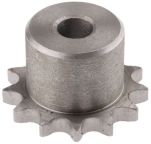
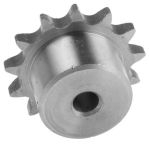
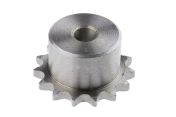
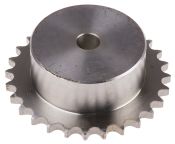
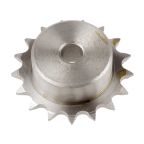
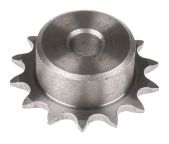
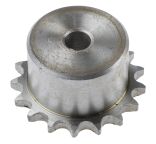
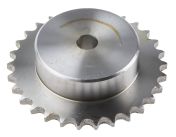
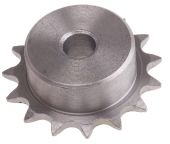
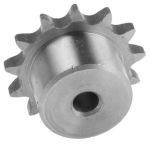
Type B roller chain sprockets feature a hub extension on one side, providing a solid surface for a keyway, set screw, or taper lock bush to grip the shaft. This design is the standard choice for most Australian power transmission applications, offering a balance of secure attachment and ease of alignment for the chain sprocket.
Type C (Double Hub)
A Type C industrial chain sprocket is designed with hub extensions on both sides to provide maximum support and surface area contact with the shaft. This configuration is preferred for heavy-duty Australian industrial equipment, as it distributes high-torque loads more evenly and prevents the wheel with sprocket from wobbling under extreme pressure.
Simplex, Duplex, and Triplex
Depending on the power requirements of the system, an industrial sprocket can be manufactured to accommodate single (Simplex), double (Duplex), or triple (Triplex) strands of chain. Using a multi-strand chain wheel allows for a significantly higher power transmission capacity within a compact footprint, which is essential for high-capacity mining and agricultural conveyors.
Roller Chain Sprocket Materials and Durability
The longevity of a roller sprocket in the demanding Australian environment depends heavily on choosing a material that can withstand both mechanical stress and environmental exposure.
- Mild Steel (1045): This is the most common material for a general-purpose industrial sprocket, offering a cost-effective balance of strength and machinability for standard workshop applications.
- Stainless Steel: Specifically utilised for roller chain sprockets in food-grade processing plants or corrosive Australian marine environments, this material prevents rust and contamination.
- Hardened Teeth: For high-torque applications, roller chain sprockets often undergo induction hardening on the teeth to resist wear and deformation, significantly extending the life of the chain wheel under heavy loads.
How to Measure and Identify a Sprocket
Correctly identifying the specifications of a link chain sprocket is critical to ensure it meshes perfectly with the drive system without causing premature chain failure.
To identify a sprocket, follow this technical checklist:
- Pitch Measurement: Determine the chain sprocket pitch by measuring the distance between the centres of two adjacent teeth to ensure it matches your specific chain size (e.g., 0.5" or 0.75").
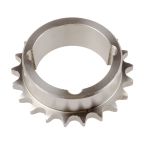
- Bore Type: Identify whether the industrial sprocket requires a plain "pilot" bore for custom machining, a Taper Lock bush for easy installation, or a finished bore with a specific keyway.
- Tooth Count: Count the number of teeth to determine the gear ratio of the chain wheel, as changing this count will directly alter the output speed and torque of your machinery.
Maintenance: Identifying Sprocket Wear
The most common sign of a failing sprocket wheel is the development of a "hooked" profile, where the teeth become curved and thin on one side due to the constant pressure of the rollers. As the industrial sprocket wears down, the pitch diameter effectively changes, causing the chain to climb the teeth or vibrate excessively during operation.
To protect your investment, it is critical to replace the sprocket before this hooking becomes pronounced, as a worn chain wheel will rapidly stretch and destroy a new link chain, leading to costly downtime.
Industrial Applications for Sprockets
High-quality industrial sprockets are small but fundamental to the reliable operation of heavy-duty machinery across Australia’s various industrial sectors.
- Mining and Quarrying: Heavy-duty roller chain sprockets are utilised in massive conveyor systems and crushers to transport raw materials under extreme torque and abrasive conditions.
- Agriculture and Farming: A robust chain wheel is essential for the drive systems of harvesters, seeders, and bailers, where equipment must operate reliably in dusty, outdoor Australian environments.
- Food and Beverage Processing: Stainless steel roller chain sprockets are the standard for bottling lines and food conveyors, ensuring hygiene compliance while handling high-speed cycles.
- Manufacturing and Packaging: Precision roller sprocket assemblies are used in automated assembly lines to synchronise movement, ensuring accurate timing for product packaging and palletising.
- Materials Handling: Warehouse automation and forklift mast assemblies rely on a link chain sprocket to provide the mechanical advantage necessary for lifting and moving heavy loads safely.
- Waste and Recycling: Industrial-grade sprocket wheel units drive the heavy-track systems and sorting conveyors used in large-scale Australian recycling facilities to process bulk waste.
Buy Sprockets Online from RS
Investing in a robust sprocket is essential for maintaining the efficiency of power transmission systems in Australia’s most demanding industries. At RS, we stock a comprehensive range of roller chain sprockets from leading brands like SKF, INA and SCHAEFFLER, ensuring you have access to components that meet stringent ISO and ANSI standards. We also carry other roller chain accessories such as chain guides, chain tensioners and chain splitters for your power transmission needs. For more information about our convenient delivery options and fees, please visit our delivery information page.
Related links
- A Complete Guide to Sprockets
- Roller Chains & Accessories
- Roller Chain Links
- RS PRO 20 Tooth Taper Bush Sprocket 06 B-1
- SKF 15 Tooth Rough Stock Bore Sprocket, PHS 12B-1BH15 12 B-1
- RS PRO 38 Tooth Taper Bush Sprocket 12 B-1
- RS PRO 15 Tooth Taper Bush Sprocket 12 B-1
- SKF 21 Tooth Taper Bush Sprocket, PHS 12B-1TBH21 12 B-1