- Published 6 Feb 2023
- Last Modified 19 Nov 2025
- 10 min
A Complete Guide to RCBOs
There are many things to consider when choosing the right RCBO. Find out what RCBO stands for, how they work, and more in our comprehensive RCBOs guide.

What is an RCBO?
An RCBO stands for Residual Current Circuit Breaker with Overcurrent protection. It is a single, compact circuit breaker device that integrates two critical safety functions: protection against earth leakage currents (the role of an RCD) and protection against overcurrent faults (the role of a miniature circuit breaker). Combining these functions in one unit simplifies wiring and provides comprehensive protection for both personnel and equipment.
The use of RCBOs has become increasingly prevalent in Australia following the implementation of the AS/NZS 3000:2018 Wiring Rules. These regulations require RCD protection for all final subcircuits, making the all-in-one RCBO a preferred solution for achieving compliance and enhancing electrical safety. Design and testing requirements for RCBOs are outlined in the set of standards: IEC/EN 61009: Residual current circuit-breakers with integral overload protection for household and similar uses (RCBO).
Functions of an RCBO
An RCBO combines the functions of two electrical protection devices, providing comprehensive safety. It offers protection against earth fault currents, overcurrents and can isolate a circuit.
- Residual Current Detection (earth leakage protection like an RCD): An RCBO acts as an RCD, continuously monitoring the incoming and outgoing currents in a circuit. When a difference is detected—indicating a leakage current to earth—it rapidly trips and disconnects the power supply. The action mitigates the risk of electric shock and fire.
- Overcurrent Protection (overload & short-circuit like an MCB): The RCBO also functions as a Miniature Circuit Breaker (MCB). It monitors the current flowing through the circuit, and if the current exceeds a safe threshold, it automatically trips. Overcurrent protection is essential in preventing damage to electrical equipment and cables caused by excessive current or a short-circuit.
- Isolation Function: RCBOs, like other Circuit Breakers, provide an isolation function. An electrician or user can manually switch off the RCBO, which physically separates the circuit from the electrical supply. One can safely work on a circuit downstream of the RCBO for maintenance or installation without any risk of a shock.
How Does An RCBO Work?
The residual current circuit breaker is designed for rapid disconnection of the electricity supply, avoiding any serious and sustained electric shocks. A key aspect of how an RCBO works is its ability to detect an unbalanced electric current between the circuit supply and return conductors, which indicates a leakage current. An RCBO combines the functions of both a Miniature Circuit Breaker (MCB) and a Residual Current Device (RCD), providing protection against earth faults, overloads, and short circuits in one unit. However, there will still be a risk of injury should the person fall over after the initial shock or touch both conductors simultaneously. A difference between the currents within the conductors will always indicate a shock hazard.
The device's RCD functionality ensures rapid and automatic disconnection of a circuit upon detection of an unbalanced electric current between the circuit supply and return conductors. The RCBO’s trip mechanism is designed to operate within 25-40 milliseconds of detecting a leakage current in excess of 30mA, although it is important to note that this is only true for final circuits less than 32A. After a trip, the RCBO remains in a disconnected state until it is manually reset.
In addition to its RCD function, the RCBO also acts as an MCB. It monitors the current levels for overloads and short circuits. If a fault is detected, the RCBO trips and interrupts the power supply, preventing damage to wiring and connected appliances. The RCBO is a single circuit breaker that provides a complete, modern safety solution.
Common RCBO Brands
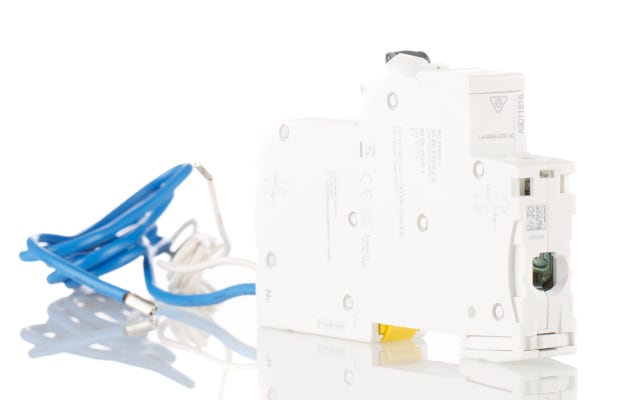
Schneider Electric
Schneider Electric offers a wide selection of RCBOs. The brand is known for advanced features and reliable protection against short-circuits, overloads, and electric shocks, suitable for a range of applications.
Functions:
- Protection against short-circuits and cable overloads
- Protection of persons against electric shock by direct contact (10, 30 mA sensitivities)
- Protection of persons against electric shock by indirect contact (100 mA sensitivity)
- Protection of equipment against fires set by leakage currents (100 mA sensitivity)
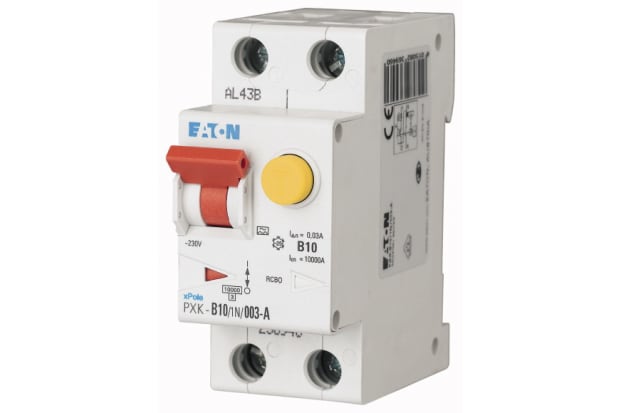
Eaton
Eaton is a global leader in electrical safety. Their RCBOs provide safe, reliable, and high-performance protection for electrical power distribution systems, ensuring system integrity and personnel safety.
Functions :
- Safe, reliable and high-performance protection on electrical power distribution systems
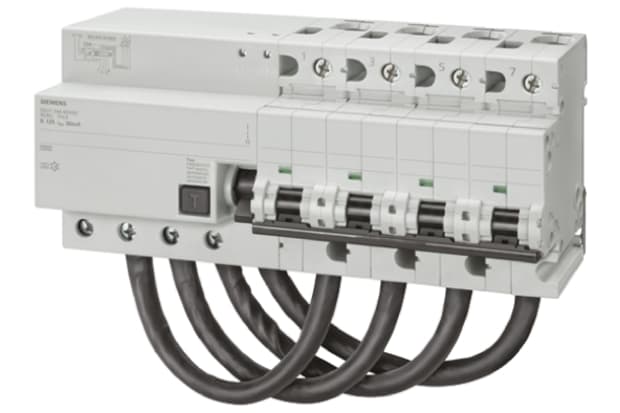
Siemens
Siemens provides a comprehensive range of RCBOs known for their innovative design and quality. Features like clear conductor connections facilitate easy installation and reliable, long-term performance.
Functions :
- Clear and visible conductor connection in front of the rear bus bar facilitates controls
- Large and easily accessible wiring space enables easy insertion of conductor in the terminals
- The surge current withstand capability of over 1 kA ensures safe and reliable operation
RCDs vs RCBOs
The main difference between an RCBO and an RCD is the type of protection they offer. An RCD (Residual Current Device) is designed to protect against earth faults, preventing electric shocks. In contrast, an RCBO combines an RCD's earth fault protection with the overcurrent protection of a Miniature Circuit Breaker (MCB).
An RCD works by continuously monitoring the current level passing through a wire in one direction and again in the reverse direction. The circuit will be automatically broken in the event that there is a difference between the currents, which indicates a leakage of 300mA or less in some instances.
You should be aware that RCDs will not react to overloads or short circuits; a separate MCB is needed for protection. All RCDs come complete with a test button for simulation. They will have a standard rating that may be anywhere from 32A to 64A. However, this rating corresponds with the internal contact and switching mechanism. The device will not trip out when the standard rating is exceeded. You will also see an indication of the imbalance that will need to occur for the device to trip.
All RCDs come complete with a test button, allowing for the simulation of an event involving disparity in the electricity supply. If the device doesn’t trip during such a simulation, then it will have to be replaced.
An RCBO works as an integrated RCD and MCB. It will break the circuit if it detects an earth leakage or if the current demand exceeds a particular level due to an overload or short circuit. An overload may be sensed in the event of a short circuit or excessive demand due to the connection of multiple devices. There would be a considerable risk of the wires melting and catching fire if the circuit were not broken. The RCBO provides comprehensive protection for people, equipment, and property.
The use of RCBOs is becoming a preferred solution in Australia. The country’s AS/NZS 3000:2018 Wiring Rules require RCD protection for final subcircuits, and the all-in-one RCBO provides this in a single unit. The added benefit of individual circuit protection means a fault in one part of the circuit does not affect a healthy circuit elsewhere.
When considering an RCBO or RCD, the question of which is better often arises. The answer is that the RCBO is better than an RCD as it offers a single-device solution for complete circuit protection, which is often safer and more convenient. While RCDs can be paired with MCBs, the integrated RCBO simplifies wiring and ensures individual circuit protection, making it a better choice for most new installations in Australia seeking maximum safety and reliability.
RCBOs vs RCCBs
The primary difference between an RCCB and an RCBO lies in their integral protection capabilities. An RCCB (Residual Current Circuit Breaker) provides exclusive earth leakage protection, meaning it guards against electric shock. In contrast, an RCBO (Residual Current Circuit Breaker with Overcurrent Protection) combines that functionality with built-in overcurrent protection.
The RCCB has very similar functionality to the RCBO in terms of earth leakage detection. However, it doesn’t provide integral overcurrent protection and so doesn’t safeguard against overloading or short-circuiting. Rather, the RCCB provides exclusive earth leakage protection and requires the fitting of an external CB for the assurance of overload and short circuit protection.
In Australia, wiring rules require both overcurrent and earth leakage protection for final subcircuits. An RCBO provides a single device solution to meet both requirements, whereas an RCCB needs to be paired with a separate MCB.
The key takeaway is that an RCBO is a complete, single-device solution for circuit protection. When choosing between an RCCB or an RCBO, the question of which is better often arises. The RCBO is often the more convenient and safer option, as it simplifies installation and ensures complete protection in one unit.
RCBO vs MCB
The main difference between an RCBO and a circuit breaker (specifically an MCB) is their protection focus. An MCB protects a circuit against damage from overcurrents only, while an RCBO provides that same overcurrent protection plus protection from earth leakage, safeguarding against electric shocks.
The MCB, or miniature circuit breaker, is an electrical switch integrated for the automatic protection of the electrical circuit from damage as a result of overcurrent. It automatically stops the flow of electricity through the circuit upon detection of a fault. The main difference between an RCBO and an MCB is that the MCB doesn’t provide protection against earth leakage.
In Australia, wiring rules mandate earth leakage protection for final subcircuits, making an MCB an insufficient standalone device for many applications.
A clear takeaway is that an MCB protects equipment from overcurrents, while an RCBO provides comprehensive protection for both equipment and people. When choosing between an RCBO and a circuit breaker, the RCBO is the safer, more compliant option for circuits requiring shock protection, offering a complete solution in a single unit.
Replacing an MCB with an RCBO
Notification will not be required in accordance with building control or Part P registration, provided that the cable sizes are appropriate, given the breaker’s rating. However, the replacement must be carried out by a qualified electrician following the manufacturer’s instructions and guidelines set out in the BS7671 standard. It will be necessary to check the levels of resistance and test the insulation. The RCBO insulation should also operate within the corresponding specifications.
An RCBO can be installed as follows:
- Isolate the electrical supply from the consumer unit
- Turn the two fasteners 90 degrees for detachment of the front cover
- Carefully loosen the bottom terminal of the device
- Open the bottom device clip
- Position the device onto the DIN rail and busbar
- Close the bottom device clip
- Firmly secure the device to the busbar and tighten the lower terminal screw
- Check the tightness of the cable connections
How to Wire RCBOs
You should ensure that the power supply is disconnected before you proceed with the wiring of an RCBO. A PE cable should then be attached to the earth bar, with the power cables being connected to the top of the isolator. The phase cable should be positioned to the left of the terminal, with the neutral cable to the right. You should then cut the busbar to the appropriate length before connecting to the bottom of the isolator and RCBO.
A neutral cable should be connected from the bottom of the isolator to the earth bar. The outbound cables will be twin-core and earth. Earth sleeving should be used to cover the earth wires before connection to the earth bar. It will then be necessary to attach the brown live wire to the terminal ‘L’ out. The neutral blue wire should be connected to the terminal ‘N’ out. Wiring must be cut to the appropriate length, with the earth lead being connected to the corresponding bar. This process should continue with the attachment of the neutral supply lead to the appropriate bar.
How to Fit RCBOs
Before proceeding with installation, remember that in Australia, only licensed electricians may legally install RCBOs. All work must comply with Australian standards, particularly the AS/NZS 3000 Wiring Rules, to ensure a safe and compliant installation.
- Residual current rating: For residential applications, an RCBO with a 30mA rating is standard, providing protection against electric shock. For industrial or fire protection, you should ensure that the RCBO offers at least 10mA protection, has a 25A current rating, is SRIM certified, and provides A-type protection.
- Current rating: Choose a current rating (e.g., 16A, 20A, 32A) that matches the circuit's load to ensure proper overload protection without nuisance tripping.
- Type: Type A RCBOs are recommended for most modern installations, as they provide broad protection against AC residual currents and pulsating DC residual currents from electronic devices.
- Compliance: The RCBO must be RCM-marked and meet AS/NZS 61009.1 to ensure compliance with Australian standards for electrical safety and performance.
Installing RCBOs
Ensuring the appropriate connection of the wiring is essential to ensure that the RCBO works properly. The cabling should be attached to the corresponding terminal and then tightened with a screwdriver. The next step will be to connect the earth wire from the RCBO to the bar, again tightening with the screwdriver. One should also consider upstream coordination with MCBs or other switchgear, especially in industrial settings, to prevent mis-tripping.
Furthermore, one must factor in environmental conditions like dust, moisture, and vibration. Choosing a suitable enclosure or mounting method helps protect the RCBO and ensures its reliability in challenging environments.
After installation, you can check on the connection by flicking the RCBO test button, which should cause it to trip. Periodic testing, such as quarterly or annually, is also recommended to ensure the RCBO remains in working order over time, providing continuous protection.
Related links
- RCBOs
- Complete Guide to MCBs: Type A C D Circuit Breakers
- A Complete Guide to PID Temperature Controllers
- RCD Testing: How to Test and Requirements in Australia by State
- A Complete Guide to Contactors: What It Is and How It Works
- A Comprehensive Guide to Wiring a Relay
- A Complete Guide to RCA Connectors
- Understanding Rheostats: A Comprehensive Guide to Their Function and Mechanics