Car Fuses
Car fuses, also called automotive fuses or vehicle fuses, are electrical safety devices that protect various circuits in a vehicle from damage caused by excessive current flow. These small, low-cost components are designed to break or “blow” when a circuit experiences an overload or a short circuit.
The primary purpose of a car fuse is to protect the electronics, wiring and integrated devices, ensuring the safety of both drivers and passengers in today’s increasingly electronic vehicles. You can learn more in our car fuses guide.
What Are Blade Fuses?
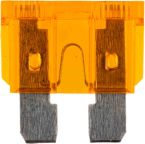
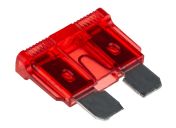
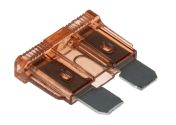
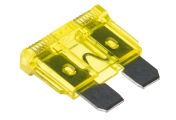
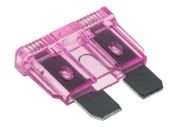
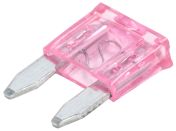
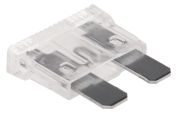
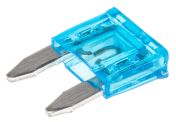
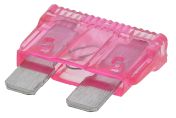
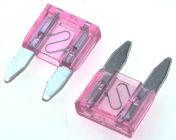
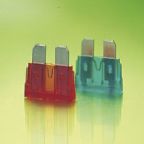
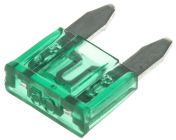
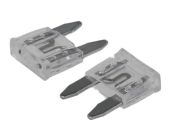
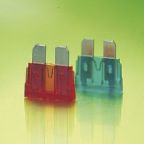
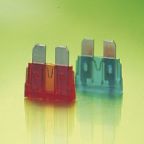
Blade fuses (sometimes called bladed fuses or spade fuses) are the most common type of fuse found in modern cars and lorries across Australia. They have a plastic body and metal prongs that fit into the sockets. Blade fuses are easy to install into a fuse box or fuse holders as they are a simple push-in component. There are four common blade fuse sizes:
- Maxi blade fuses (APX fuses) are the biggest type of car fuse. They have the highest amperage rating and are suited for heavy-duty applications.
- Regular blade fuses (APR, ATC, or ATO fuses) are the most popular and are suited for low-voltage applications.
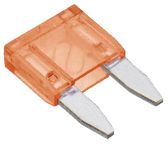
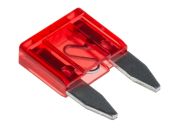
- Mini blade fuses (APM or ATM fuses) are smaller than regular blade fuses and cover a similar amperage range.
- Micro blade fuses are the smallest mini blade fuse and cover a smaller range of amperage. They are available in two or three-prong configurations.
Blade Fuses Colours
Blade fuses utilise a standardised colour coding system that indicates their current rating. This industry-wide practice allows for quick and straightforward identification and replacement of fuses within your vehicle. Each colour corresponds to a specific current-carrying capacity, making it easy to select the correct replacement fuse. For example, a red fuse typically signifies a 10 Amp rating, while a blue fuse might indicate 15 Amps.
Other Types of Car Fuse
While blade fuses are the standard in most modern vehicles, other types of auto fuses are available. Many older vehicles in Australia, particularly classic car restorations, still use 'Bosch' style or ceramic fuses (also called torpedo, ATS, or GBC fuses).
Link fuses are also commonly found within vehicles, designed for higher current and higher power applications. These are available as strips, or as 'midi link fuse' or 'mega link fuse' sizes, typically bolted down within a fuse box or fuse holder.
Safety Precautions When Working with Vehicle Fuses
When working with vehicle fuses and electrical components in your car, always prioritise safety:
- Disconnect the battery: Before inspecting or replacing any fuses, always disconnect the vehicle's battery to prevent accidental electrical shocks or short circuits.
- Avoid wet conditions: Never work on electrical systems in wet or damp conditions, as this significantly increases the risk of electric shock.
- Use appropriate tools: Use the correct tools for removing and installing fuses to avoid damage to the fuse box or fuses themselves.
- Seek professional help: If you are unsure about any electrical repairs or diagnosing the cause of a blown fuse, it is always best to seek assistance from a qualified automotive professional.
Avoid Common Mistakes when Purchasing Car Fuses
To ensure the safety and proper functioning of your vehicle's electrical system, avoid these common mistakes when dealing with car fuses:
- Never guess the rating: Always replace a blown fuse with one of the exact same amperage rating. Using a higher-rated fuse can bypass the intended protection and potentially lead to serious damage or even fire.
- Address repeated failures: If a fuse blows repeatedly, it indicates an underlying electrical problem that needs to be diagnosed and fixed by a qualified mechanic. Simply replacing the fuse without addressing the root cause is not a long-term solution.
- Match fuse types: Ensure you are replacing a specific fuse type (e.g., ATO) with the same type. Different fuse types have different physical dimensions and electrical characteristics, and using the wrong type can lead to improper fit or function.
Applications of Car Fuses
While primarily used in cars and other road vehicles, automotive fuses and their principles of circuit protection extend to various industrial applications involving mobile or battery-powered equipment:
- Discrete Manufacturing: Protecting electrical circuits in automated guided vehicles (AGVs) and other mobile robots used in manufacturing processes.
- Process Manufacturing: Safeguarding electrical components in portable welding units and other mobile maintenance equipment used in process plants.
- Energy & Utilities: Protecting circuits in service vehicles and mobile power generators used for field operations and maintenance.
- Facilities & Intralogistics: Ensuring the electrical safety of forklifts, electric pallet jacks, and other mobile material handling equipment within warehouses and distribution centres.
Your Trusted Car Fuses Supplier & Manufacturer
RS Australia is your reliable source for a wide range of high-quality car fuses and auto fuses. We stock an extensive selection from trusted brands like Phoenix Contact, Eaton, and RS PRO. Whether you need standard blade fuses, mini fuses, or heavy-duty link fuses, we offer competitive prices and a comprehensive inventory to meet your automotive and industrial electrical protection needs.
We also carry a wide array of related components, such as cartridge fuses and fuse holders, providing complete solutions for your vehicle and equipment maintenance requirements. Order your car fuses online today. For more details on our ordering process, delivery services, and delivery fees, please refer to our Delivery page.


Popular Searches
Related links
- Automotive & Car Fuse Types: A Comprehensive Guide
- Littelfuse 1A Black Blade Car Fuse, 32V dc
- RS PRO 30A Green Blade Car Fuse, 32V dc
- Eaton 30A Green Blade Car Fuse, 32V dc
- Littelfuse 40A Orange Blade Car Fuse, 32V dc
- RS PRO 20A Yellow Blade Car Fuse, 32V dc
- RS PRO 15A Blue Blade Car Fuse, 32V dc
- Littelfuse 10A Red Blade Car Fuse, 32V dc