Trolley Wheels
Trolley wheels are used in industrial, commercial, and material-handling applications to enable smooth movement of trolleys, sack trucks, and carts. The correct trolley wheel selection depends on load capacity, mounting style, wheel material, and the operating environment. Choosing the right specification reduces wear, ensures safety, and prolongs service life.
Load Capacity
One of the first considerations in specifying trolley wheels is the load capacity. Each wheel type is designed to support a defined maximum weight, expressed in kilograms per wheel.
- Light-duty wheels are suitable for smaller hand trucks or light carts used in retail and office environments.
- Medium-duty wheels are used in warehouses, factories, and workshops, typically supporting loads between 100–300 kg.
- Heavy-duty sack truck wheels and industrial trolley wheels are designed for continuous use with loads exceeding 500 kg, often in manufacturing or logistics operations.
Trolley wheels are also referred to as fixed castors as they are designed to move in a straight line. Castors, on the other hand, are a broader category that includes both fixed (trolley wheels) and swivel varieties. In essence, all trolley wheels are a type of castor, but not all castors are trolley wheels.
Trolley Wheels Mounting Styles
The way trolley wheels are mounted affects manoeuvrability and load distribution.
Fixed Mounting
Fixed-mount wheels are secured in one direction and provide straight-line movement. These are common on heavy-duty trolleys where controlled, linear transport is required.
Swivel Mounting
Swivel-mounted hand trolley wheels rotate 360° around a vertical axis, providing flexibility in movement and easy turning. They are often fitted in combination with fixed wheels to allow both steering and stability.
Braked Mounting
Braked wheels incorporate a locking mechanism to prevent unintentional movement. These are used on inclined surfaces, during loading operations, or for mobile workstations where stability is essential.
Wheel Material Options
The performance of trolley wheels is heavily influenced by the wheel material. Different materials determine resistance to wear, floor protection, noise levels, and suitability for different load conditions.
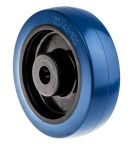
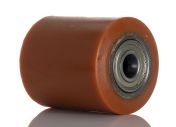
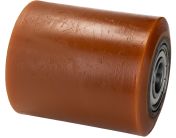
Polyurethane Wheels
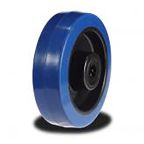
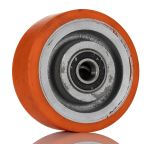
Polyurethane wheels combine high load-bearing capacity with floor protection. They are commonly used in warehouses, production facilities, and logistics applications. Key characteristics:
- Low rolling resistance for reduced operator effort.
- Resistant to oil, grease, and mild chemicals.
- Quieter operation compared to harder wheels.
These are frequently chosen for sack trolley wheels in environments requiring continuous movement of heavy loads with minimal floor damage.
Rubber Wheels
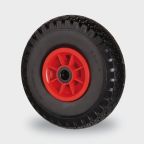
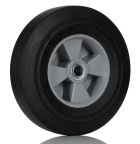
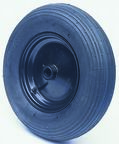
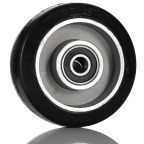
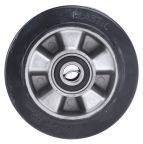
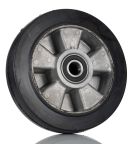
Rubber trolley wheels are widely used where shock absorption and quiet operation are required. Both pneumatic and solid designs are available:
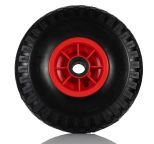
- Solid rubber trolley wheels are puncture-resistant and suited to rough surfaces.
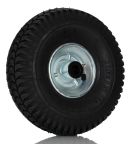
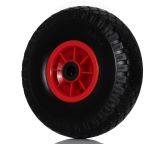
- Sack truck tyres (pneumatic) provide cushioning and grip but require inflation and maintenance.
- Solid wheels and solid trolley wheels reduce downtime by eliminating the risk of flats while offering durability on uneven floors.
Solid rubber trolley wheels are particularly common for sack truck wheels used outdoors or in delivery applications.
Nylon Wheels
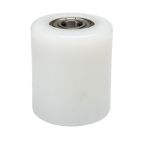
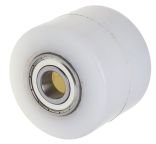
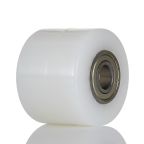
Nylon wheels are hard-wearing and resistant to impact. They offer high load capacity while maintaining low rolling resistance. Common uses include industrial carts and equipment trolleys.
- Non-marking on most surfaces.
- Resistant to moisture and many chemicals.
- Suitable for applications with frequent cleaning, such as food processing plants.
However, they can produce significant noise on hard floors and transmit vibration more readily than rubber or polyurethane.
Steel Or Cast Iron Wheels
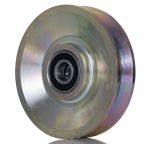
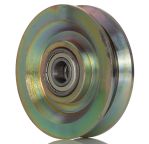
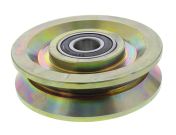
Steel or cast iron wheels are used for heavy industrial applications where maximum durability and load-bearing capacity are required.
- Capable of handling extreme weights.
- Resistant to high temperatures, making them suitable for foundries and metalworking plants.
- Long service life even under continuous operation.
They are less forgiving on delicate flooring and are typically used only on reinforced surfaces.
Industrial Applications Of Trolley Wheels
Warehousing And Logistics
In warehouses, trolley wheels are fitted on order-picking trolleys, cage trolleys, and sack trucks. Sack trolley wheels allow staff to move boxes and parcels efficiently across concrete flooring. Trolley wheels online ordering allows businesses to source replacements quickly when wear occurs. Increasingly, trolleys are operated via automatic control, introducing new variables.
Manufacturing Plants
Industrial trolley wheels are used on line-side trolleys, conveyors, and heavy material-handling equipment. Solid wheels and nylon wheels are common where consistent, high load-bearing performance is required.
Retail And Commercial
In commercial settings, hand trolley wheels are used on smaller transport carts and display units. Rubber trolley wheels are favoured for their quiet operation, protecting floors while maintaining smooth movement.
Outdoor And Delivery
For couriers and delivery operations, sack truck tyres and solid rubber trolley wheels are selected for rough pavements, kerbs, and variable outdoor conditions. Their puncture-resistant designs reduce downtime and maintenance.
How To Choose The Right Trolley Wheel
When selecting trolley wheels, consider the following factors:
- Load Rating: Ensure each wheel can safely support the intended weight.
- Floor Surface: Choose softer materials (rubber, polyurethane) for indoor use, harder materials (nylon, steel) for heavy-duty or industrial floors.
- Environment: For wet or chemical-exposed conditions, select corrosion-resistant or non-absorbent materials such as nylon or polyurethane.
- Mobility Requirements: Use swivel wheels for manoeuvrability, fixed wheels for straight-line movement, and braked wheels for stability.
- Maintenance: Pneumatic tyres require upkeep, while solid wheels eliminate the need for inflation.
RS Australia: Your Trusted Supplier of Trolley Wheels
RS Australia supplies a wide range of trolley wheels and accessories to meet the requirements of industrial, commercial, and transport applications. Our inventory includes extensive industrial material and hardware options such as knob fasteners, castor wheels, and HDPE sheets. We source from reputable brands like RS PRO, Lag and Tente.
Browse and buy trolley wheels online on the RS Australia website today. For detailed product specifications, availability, and shipping information, please refer to our delivery page.
Popular Searches
Related links
- RS PRO Black Rubber Corrosion Resistant Trolley Wheel, 600kg
- Guitel Hervieu Rubber Trolley Wheel, 250kg
- Sack Trucks
- Guitel Hervieu Rubber Trolley Wheel, 200kg
- RS PRO Black Rubber Puncture Proof Trolley Wheel, 100kg
- Tente White Nylon Corrosion Resistant Trolley Wheel, 1320kg
- RS PRO Puncture Proof Trolley Wheel, 75kg
- Guitel Hervieu Rubber Trolley Wheel, 125kg