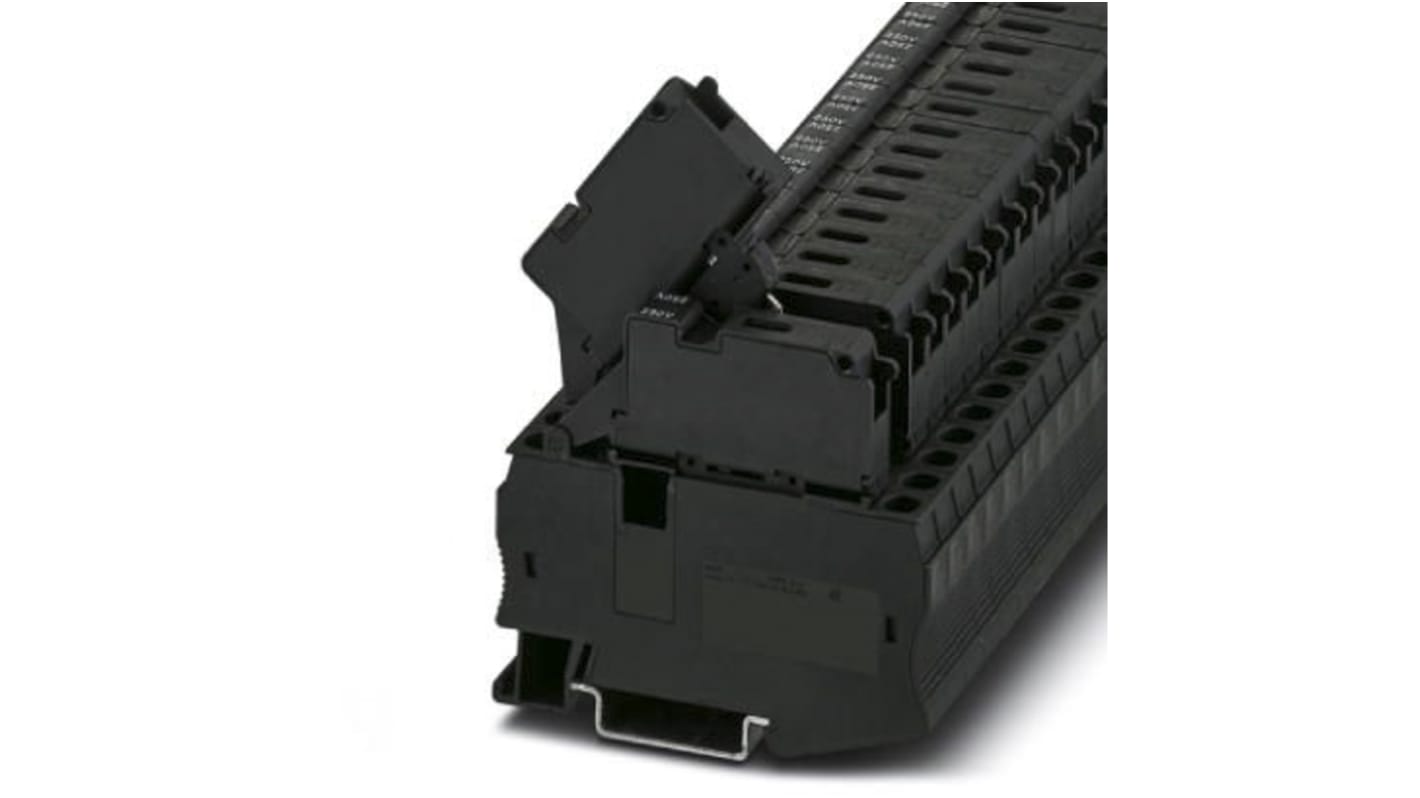
Phoenix Contact 3038778 ST 4-HESILA 250 (6.3X32) Series Non-Fuse DIN Rail Terminal Black, 1-Level, Spring Clamp

Currently unavailable
Sorry, we don't know when this will be back in stock.
RS Stock No.:
803-7555
Mfr. Part No.:
3038778
Brand:
Phoenix Contact
Find similar products by selecting one or more attributes.
Select all

Brand

Phoenix Contact

Colour

Black

Product Type

Non-Fuse DIN Rail Terminal

Sub Type

Fuse Modular

Number of Levels

1

Series

ST 4-HESILA 250 (6.3X32)

Voltage

250 V

Minimum Wire Size AWG

28 AWG

Fused

No

Maximum Wire Size AWG

10 AWG

Termination Type

Spring Clamp

Minimum Operating Temperature

-60°C

Terminal Block Current

10A

Maximum Operating Temperature

105°C

Hazardous Area Certification

No

Standards/Approvals

RS, IECEE CB, IEC 60947-7-3, EAC, DNV, cULus, CSA, KEMA-KEUR

Phoenix Contact ST 4-HESILA 250 (6.3X32) Series Non-Fused DIN Rail Terminal, 10A - 3038778


This non-fused DIN rail terminal provides a reliable solution for connecting and safeguarding electrical circuits in industrial environments. Its compact design and versatility make it essential for various wiring configurations in automation and electrical applications.

Features & Benefits


• Utilises spring cage connections for secure and effective wiring

• Adheres to CSA standards for improved safety

• Easy installation on NS 35 rail types

Applications


• Commonly used in control panels for automation systems

• Suitable for wiring in electrical distribution boards

• Frequently employed in power supply configurations

How do you install the terminal?


Installation is straightforward; simply mount it on a compatible DIN rail and connect the appropriate wires to the spring cage terminals.

What types of wires can be connected?


It accommodates both rigid and flexible conductors ranging from 0.08mm² to 6mm².

Is it suitable for high humidity environments?


Yes, it operates effectively within humidity levels of 20% to 90%.

Can it handle overloads or short circuits?


The terminal includes safety features for managing overloads, but the current limit depends on the fuse used.

Related links