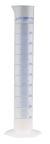
Measuring Cylinders
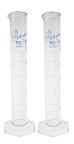
Measuring cylinders are vital instruments in laboratories for accurately measuring the volume of various liquids. Typically made from glass or plastic, these cylinders feature graduations marked in milliliters (ml) along their length, enabling precise volume measurements during pouring and dispensing. Many graduated cylinders also come equipped with a spout, facilitating easy and controlled distribution of the liquid being measured.
How Do Measuring Cylinders Work?
Measuring cylinders, often referred to as graduated measuring tubes, are indispensable instruments for accurately determining liquid volumes. Their design, whether glass or plastic, is meticulously crafted to facilitate precise measurements and ease of use in laboratory and educational settings. Accuracy relies on correctly observing the meniscus.
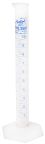
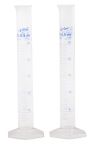
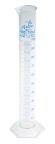
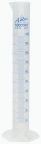
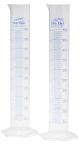
For precise liquid measurements, you can measure its volume by markings up the outside of the measuring cylinder. These markings tend to appear in millilitres (ml) and are usually graduated and embossed. In some cases, they may be printed on.
To ensure accuracy with a calibrated graduated cylinder, always read the bottom of the meniscus (the curved surface of the liquid) at eye level.
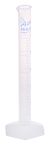
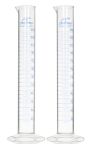
Measuring cylinders are predominantly clear, allowing the liquid to be easily measured. Their design, including a narrow neck, enhances precision by making each graduated marking more distinct for a given volume. A stable hexagon or octagon-shaped base allows them to stand upright freely, preventing spills. Many also feature a spout to help distribute contents, making pouring and dispensing clean and easy.
Industrial Applications of Measuring Cylinders
Measuring cylinders are indispensable instruments across a wide array of industrial and professional settings in Australia, where precise liquid volume measurement is essential for accuracy and quality control.
- Chemical and Pharmaceutical Laboratories: Glass graduated and plastic graduated measuring cylinders are routinely used for preparing solutions, diluting reagents, and accurately measuring chemicals for experiments.
- Food and Beverage Industry: The food and beverage sector uses measuring cylinders for exact ingredient measurement during recipe preparation and for conducting quality control checks on product volumes.
- Environmental Testing: Environmental laboratories apply measuring cylinders to accurately measure water samples, reagents, and pollutants for various analyses.
- Educational and Research Institutions: Universities, colleges, and research facilities across Australia rely on calibrated graduated measuring cylinders for student practicals, experimental work, and general liquid transfer.
- Quality Control and Manufacturing: In manufacturing processes, measuring cylinders verify the volume of raw materials or final products. They are used for quality assurance checks, ensuring consistency in production batches and compliance with specifications across various industries.
Types of Measuring Cylinders
Measuring cylinders come in various forms, offering options tailored to specific needs in laboratories, education, and industry. One can categorise them by their material, level of graduation and accuracy, or unique design features for diverse applications.
- Glass Measuring Cylinders: Traditional glass measuring cylinders offer high transparency and excellent chemical resistance, making them ideal for precise measurements with various reagents.
- Plastic Measuring Cylinders: Commonly made from PP (polypropylene) or PMP (polymethylpentene), they offer superior break-resistance compared to glass. PP is known for its hardwearing and chemical resistance, while PMP provides exceptional transparency.
- Calibrated Graduated Cylinders: Calibrated graduated measuring cylinders are independently verified for accuracy. Professionals use them where exact volume measurements are absolutely critical, ensuring reliability in sensitive experiments and quality control.
- Narrow-Necked Measuring Cylinders: Cylinders with a narrower neck at the top enhance measurement precision by making the graduated markings more distinct for smaller volume changes. This design assists in accurately reading the meniscus, particularly when working with small increments.
- Measuring Cylinders with Spouts and Bases: Many measuring cylinders include a spout for easy and precise pouring and dispensing of liquids, minimising drips. They typically feature a stable base, such as a hexagon or octagon shape, allowing them to stand upright freely and securely on lab benches.
How to Choose the Right Measuring Cylinders
Selecting the correct measuring cylinder is essential for obtaining accurate liquid volume measurements in any setting. Measuring cylinders are manufactured to specific tolerances and can be certified as "calibrated," offering enhanced precision for critical tasks.
- Material Type: Glass offers excellent chemical resistance and high transparency, while plastic options (like PP or PMP) provide superior break-resistance and often good chemical compatibility.
- Volume Capacity: Match the measuring cylinder's volume capacity to your typical liquid measurement needs, from small millilitre increments for reagents to larger volumes for batch preparations.
- Graduation and Accuracy: Look for clear, precise graduated markings. For applications demanding the highest accuracy, opt for a calibrated graduated measuring cylinder, ensuring its measurements meet certified standards.
- Design and Features: Consider the base design (e.g., stable hexagonal or octagonal bases) for stability on surfaces. A pouring spout is common, facilitating clean and easy dispensing of liquids from the measuring cylinder.
- Chemical Compatibility: Glass graduated cylinders suit a wide range, while specific plastic graduated types are better for certain corrosive substances.
- Transparency: Most measuring cylinders are clear, allowing easy observation of the liquid level and meniscus. High transparency, especially in plastic cylinders like those made from PMP, aids in accurate readings.
- Certification (Calibrated): For regulatory compliance or highly sensitive experiments, choose a calibrated measuring cylinder. These instruments have undergone rigorous testing to confirm their accuracy, providing confidence in your volume measurements.
Supplier and Distributor of Measuring Cylinders in Australia
RS is your trusted partner for high-quality measuring cylinders. We provide a comprehensive portfolio from world-leading manufacturers like RS PRO and Hanna Instruments. Our extensive stock includes capacities from 50ml for precise reagent measurement to 2L for general solution preparation, along with glass graduated, plastic graduated, and calibrated graduated options. We guarantee you can source the ideal measuring cylinder for your laboratory or industrial needs.
We also offer a wide catalogue of lab equipment, ensuring precision and reliability in your experiments. Explore our range including lab flasks, pipettes, and lab bottles. You can easily buy your measuring cylinders and other essential lab components online today. For comprehensive information on our ordering options, shipping services, and any applicable delivery charges, please visit our delivery page.